Mini Split Installation in Douglasville, GA
A new system here will heat from November through April and cool from May through September every year. Tell us about the house, and a licensed contractor who covers Douglas County will get in touch.
Tell us about the job
It takes about a minute.
Douglasville asks a lot of a mini-split, 11 months a year
Homes here need heat from November through April, six months a year. They need cooling from May through September, five more. That leaves one month of rest for a system that otherwise runs nearly all the time. Winter nights average 34°F from December through February. Summer afternoons average 88°F. A mini-split installed here has to handle both ends of that range, not just one.
A mini-split counts as a split system under federal rules. If it was manufactured on or after January 1, 2023, it has to meet 14.3 SEER2 for cooling and 7.5 HSPF2 for heating. That is the floor, not a target. Sizing it for the months of work it will actually do here matters more than meeting the number alone.
- 6 months
- November through April, your system heats
- 5 months
- May through September, it cools
- 34°F
- the average winter night it heats against
- 88°F
- the average summer afternoon it cools against
NOAA nClimDiv, 1991–2020 normals
Georgia requires HVAC contractors to hold a state license.
Georgia issues this license through the State Construction Industry Licensing Board. It is tested and tracked at the state level, and it belongs to the contractor, not to any single job, so the same license covers a mini-split install as much as anything else the contractor is hired for.
For this job, that license is what stands behind the person doing the work. A mini-split installation also involves refrigerant lines, and in most cities and counties it needs a permit from the local building office along with an inspection once the work is done, so someone outside the company checks it too.
Source: Georgia Secretary of State
- Is a mini split worth it?
- For the right room or house, yes. A mini split heats and cools without ducts, so it works well for an addition, a garage, or a home that never had ductwork to begin with. It also handles both jobs here, since this area needs heat from November through April and cooling from May through September. Whether it makes sense for your particular house is something a contractor can walk through with you.
- How many rooms can a mini split cover?
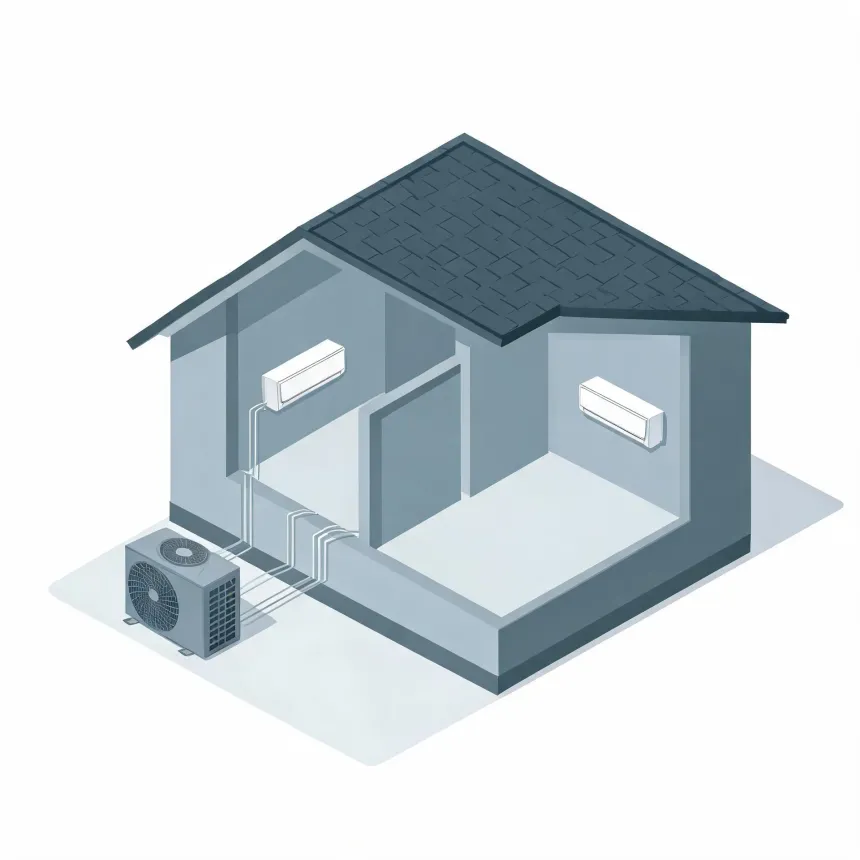
- A single-zone system covers one room or open area. A multi-zone system runs several indoor units off one outdoor unit, so it can cover that many rooms or zones at once. Each indoor unit heats and cools only the space it's mounted in, so the layout of the house decides how many you actually need. A contractor can look at the floor plan and size it correctly.
- Can a mini split heat a whole house?
- A multi-zone mini split can heat a whole house if enough indoor units are placed to reach every room. Each zone heats the space it's installed in, so a house with several closed-off rooms needs a unit in each one, not just one unit trying to reach the whole place. Winter nights here average 34°F, so the system also needs to be sized for that low, not just for mild days. A contractor can calculate the heat loss for your house and tell you how many zones it takes.