Mini Split Installation in Atlanta, GA
A new system here will heat from November through April and cool from May through September every year. Tell us about the house, and a licensed contractor who covers Fulton County will get in touch.
Tell us about the job
It takes about a minute.
Fulton County asks a mini-split to run almost all year
November through April you'll want heat. May through September you'll want cooling. Add it up and homes here need one or the other 11 months out of the year. Winter nights average 35°F, mild by most standards, but that's still a heat pump working night after night through the whole stretch. Summer afternoons average 88°F, and the unit has to hold that back for five straight months.
Any mini-split installed new has to meet the federal minimum for a split-system heat pump. That's 14.3 SEER2 for cooling and 7.5 HSPF2 for heating, the same floor set for any split-system heat pump. Georgia also saw 31% of households lose power for at least 24 hours in 2024, and the last ten years brought 162 damaging wind events and 10 winter storms to the state. A mini-split comes back on by itself once power is restored, but the storms behind those outages are part of what a new install here has to stand up to.
- 6 months
- November through April, your system heats
- 5 months
- May through September, it cools
- 35°F
- the average winter night it heats against
- 88°F
- the average summer afternoon it cools against
NOAA nClimDiv, 1991–2020 normals
Georgia requires HVAC contractors to hold a state license.
The state board tests the contractor before issuing that license and keeps a record of it. The license attaches to the business, not to any single job. That exam and that record are what stand behind the person doing the work on your mini-split.
Most cities and counties in Georgia require a permit for this kind of installation and an inspection once the work is done. That inspection is what checks the installation itself, separate from the license that covers who is doing it.
Source: Georgia Secretary of State
- Is a mini split worth it?
- For the right house, yes. A mini split heats and cools without ductwork, so it works well in a room addition, a converted garage, or a house that never had ducts to begin with. Atlanta needs heat or cooling 11 months of the year, so a system that handles both jobs well gets used most of the year here. Whether it makes sense for your house depends on what you're heating and cooling now, and a contractor can walk through that with you.
- How many rooms can a mini split cover?
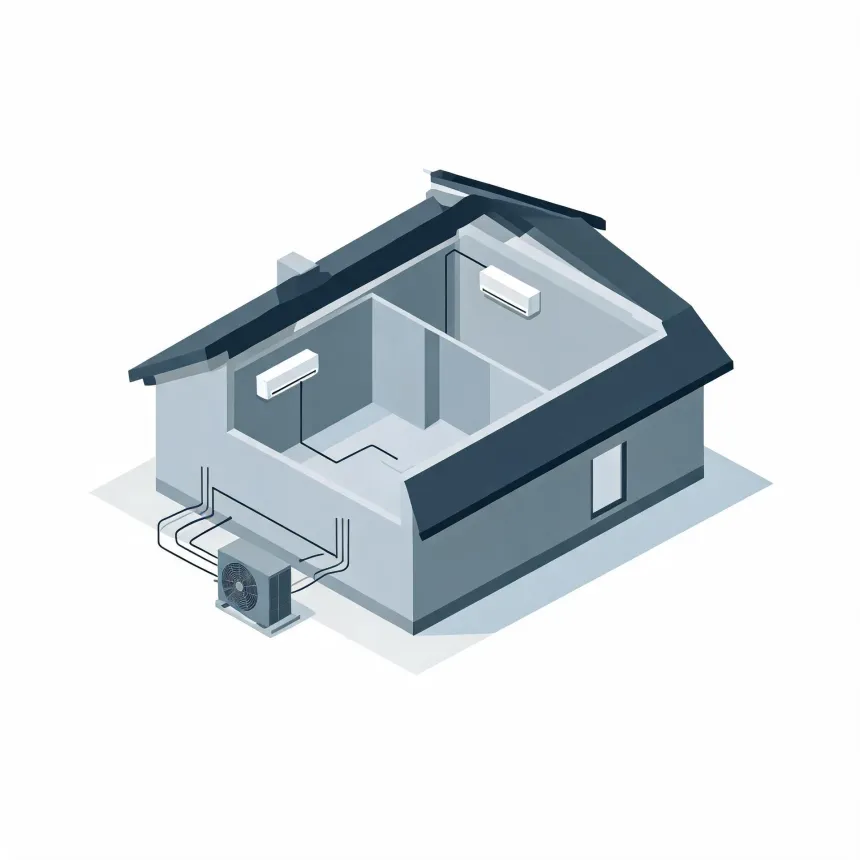
- A single indoor unit is built to heat and cool the room it's in, not the whole house. Multi-zone systems connect one outdoor unit to several indoor heads, so you can cover that many rooms or areas with separate controls for each. How many zones your house needs depends on the layout, so a contractor sizing the job will look at each room before recommending a system.
- Can a mini split heat a whole house?
- It can, if it's designed for that from the start. A multi-zone system with an indoor head in each main room can heat the whole house, and the heat pump itself works down into cold weather since Atlanta's winter nights average 35°F rather than dropping far below freezing. A single indoor unit won't heat rooms it isn't installed in, so whole-house coverage comes down to how many zones the system has and where they're placed.