Mini Split Installation in Mableton, GA
A new system here will heat from November through April and cool from May through September every year. Tell us about the house, and a licensed contractor who covers Cobb County will get in touch.
Tell us about the job
It takes about a minute.
What a mini-split in Mableton has to handle
Your mini-split runs 11 months a year here. Heat from November through April, cooling from May through September, with only a short stretch outside that. Winter nights average 34°F. Summer afternoons average 88°F, and that's when the unit works hardest to keep the house cool.
A new system installed today has to meet the federal minimum for split-system heat pumps, 14.3 SEER2 for cooling and 7.5 HSPF2 for heating. That's the floor, not a feature, so any unit you're quoted should clear it. Georgia saw 31% of households go at least 24 hours without power in 2024, and the area has recorded 5 winter storms and 70 damaging wind events over the past ten years. It's worth asking how the system you install comes back on once power returns.
- 6 months
- November through April, your system heats
- 5 months
- May through September, it cools
- 34°F
- the average winter night it heats against
- 88°F
- the average summer afternoon it cools against
NOAA nClimDiv, 1991–2020 normals
Georgia requires HVAC contractors to hold a state license.
Georgia licenses HVAC contractors through the State Construction Industry Licensing Board. That license covers the contractor, not each job, so it stands behind every install they do, not just this one.
For a mini-split install, that license is what stands behind the person doing the work. Most cities and counties in Georgia also require a permit for this kind of installation, with an inspection once the work is done, and that permit checks the installation itself, separate from the contractor's license.
Source: Georgia Secretary of State
- Is a mini split worth it?
- For a lot of homes here, yes. A mini split heats and cools without ductwork, so it works well for additions, garages, or older homes that never had ducts run to every room. It also gives you a heat pump, which matters since winters average 34°F and summers hit 88°F, so the same system covers both seasons instead of running a furnace and a separate air conditioner. Whether it makes sense for your house depends on the layout and what you already have for heat and air, so a contractor should walk through that with you.
- How many rooms can a mini split cover?
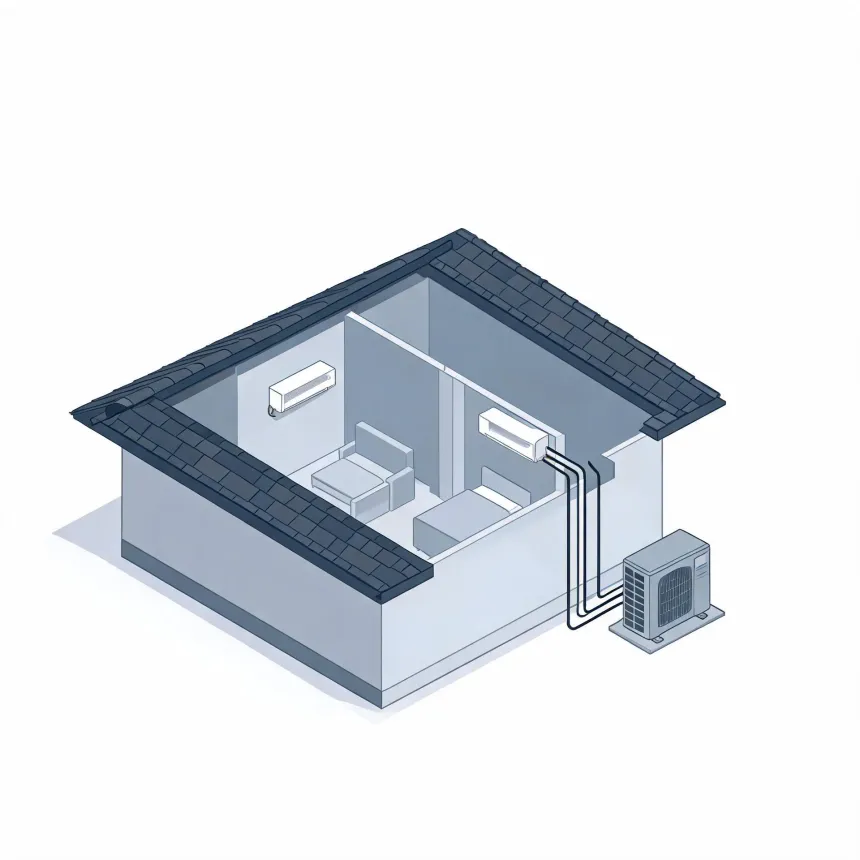
- That depends on how many indoor heads the outdoor unit is matched with. Each head is sized for the room it sits in, so a contractor picks the number of heads and their capacity based on the square footage and layout of your house. Bigger homes or ones with a lot of separate rooms sometimes need a second outdoor unit to cover everything properly.
- Can a mini split heat a whole house?
- Yes, if it is sized and placed for that. A multi-zone system with a head in each main room can carry the whole house through the 34°F nights this area sees from December through February. What decides it is the layout, the size of each room, and how many zones the system is designed with, so a contractor needs to look at the house before saying what setup covers it.