Mini Split Installation in Peachtree Corners, GA
A new system here will heat from November through April and cool from May through September every year. Tell us about the house, and a licensed contractor who covers Gwinnett County will get in touch.
Tell us about the job
It takes about a minute.
Eleven months of work for a mini-split here
In Peachtree Corners, a mini-split runs nearly all year. Homes need heat November through April and cooling May through September. Winter nights average 34°F, mild enough that a heat pump can carry the heating load without much help. Summer afternoons average 87°F, and that heat holds on for five straight months.
Any new mini-split has to meet the federal minimum for a split-system heat pump. That means 14.3 SEER2 for cooling and 7.5 HSPF2 for heating. Gwinnett County has logged 143 damaging wind events over the past ten years, and across Georgia, 31% of households lost power for at least 24 hours in 2024. A new system should start back up on its own once power returns.
- 6 months
- November through April, your system heats
- 5 months
- May through September, it cools
- 34°F
- the average winter night it heats against
- 87°F
- the average summer afternoon it cools against
NOAA nClimDiv, 1991–2020 normals
Georgia requires HVAC contractors to hold a state license.
The license is issued to the contractor, not to this particular installation. The state tested that contractor and keeps a record of them, and that record follows them from job to job, not just this one on your property.
A mini-split install also needs a permit from the local building office in most Gwinnett County cities and unincorporated areas, along with an inspection once the work is done. That inspection is what confirms the line set, wiring, and mounting were done right, separate from whatever the state license already tells you about the contractor.
Source: Georgia Secretary of State
- Is a mini split worth it?
- For most homes, yes, especially if you're heating or cooling a room your main system doesn't reach well, like a bonus room, garage conversion, or addition. A mini split gives that space its own thermostat, so you're not running the whole house to fix one room. Winters here still drop to an average low of 34°F, so look for a unit rated for cold-climate heating if you want it to carry real heat load and not just take the edge off.
- How many rooms can a mini split cover?
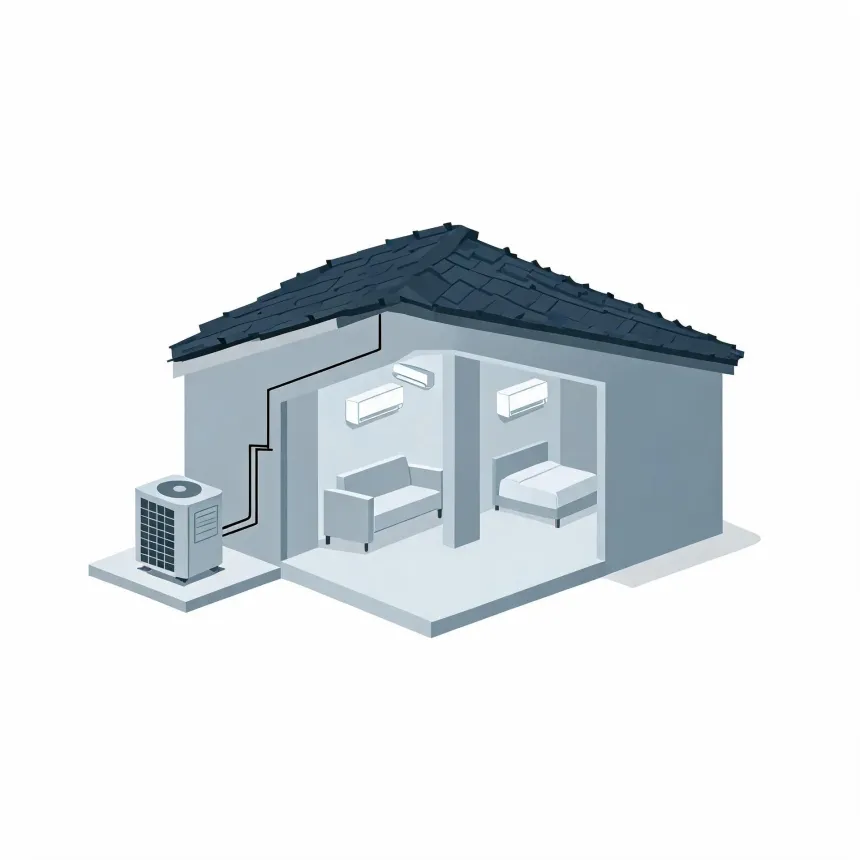
- A single indoor head handles one room or one open area well. If you need more than that, a multi-zone system lets one outdoor unit run several indoor heads, each in a different room with its own thermostat. Past a certain number of zones, most homes do better with a second outdoor unit than one oversized multi-zone setup. A contractor can size the system to the rooms you actually want covered.
- Can a mini split heat a whole house?
- It can, if it's sized and placed for that from the start. A multi-zone system with enough indoor heads can cover every room, and modern heat pumps keep working in cold weather, which matters here since homes need heat from November through April. Whether it makes sense to replace a whole-house furnace with one depends on the layout and how the rooms connect, so this is worth having a contractor walk through in person.