Heat Pump Installation in Peachtree Corners, GA
A new system here will heat from November through April and cool from May through September every year. Tell us about the house, and a licensed contractor who covers Gwinnett County will get in touch.
Tell us about the job
It takes about a minute.
Eleven months of work for a new heat pump
Peachtree Corners asks a heat pump to work almost all year. Homes need heat November through April, six months, with winter nights averaging 34°F. Homes need cooling May through September, five months, with afternoons averaging 87°F. Only one month sits outside either season.
A new heat pump has to hold up through both stretches, not just the coldest night or the hottest afternoon. Any split-system heat pump installed now has to meet 14.3 SEER2 for cooling and 7.5 HSPF2 for heating, the federal minimum since 2023. That is the floor. A unit running eleven months a year is doing more work than one built for a shorter season, and it is worth asking what a contractor is installing above that minimum.
- 6 months
- November through April, your system heats
- 5 months
- May through September, it cools
- 34°F
- the average winter night it heats against
- 87°F
- the average summer afternoon it cools against
NOAA nClimDiv, 1991–2020 normals
Georgia requires HVAC contractors to hold a state license.
The state license is held by the contractor, not tied to any one job. Georgia's Construction Industry Licensing Board tests and records the person or company, so the same license covers this heat pump install and whatever job they do next. It does not mean a state inspector checks this particular installation.
That check comes from the local building office. In most cities and counties, putting in a new heat pump needs a permit before the work starts and an inspection once it's done, and that inspection is what confirms this specific job was done right. The state license tells you the contractor was tested. The permit and inspection tell you this installation was checked.
Source: Georgia Secretary of State
- Is a heat pump better than a furnace?
- It depends on what you're comparing it to and what fuel is available. A heat pump moves heat instead of burning fuel to create it, so it handles both heating and cooling with one system, and it costs less to run than electric resistance heat. A gas furnace can put out higher temperature air and keep working without losing capacity as it gets colder outside. Most homes here heat with gas, so the choice often comes down to whether you want to keep that furnace for backup or replace the whole setup. A contractor can look at your ductwork and your gas line and tell you which makes sense for your house.
- What's the difference between a heat pump and an air conditioner?
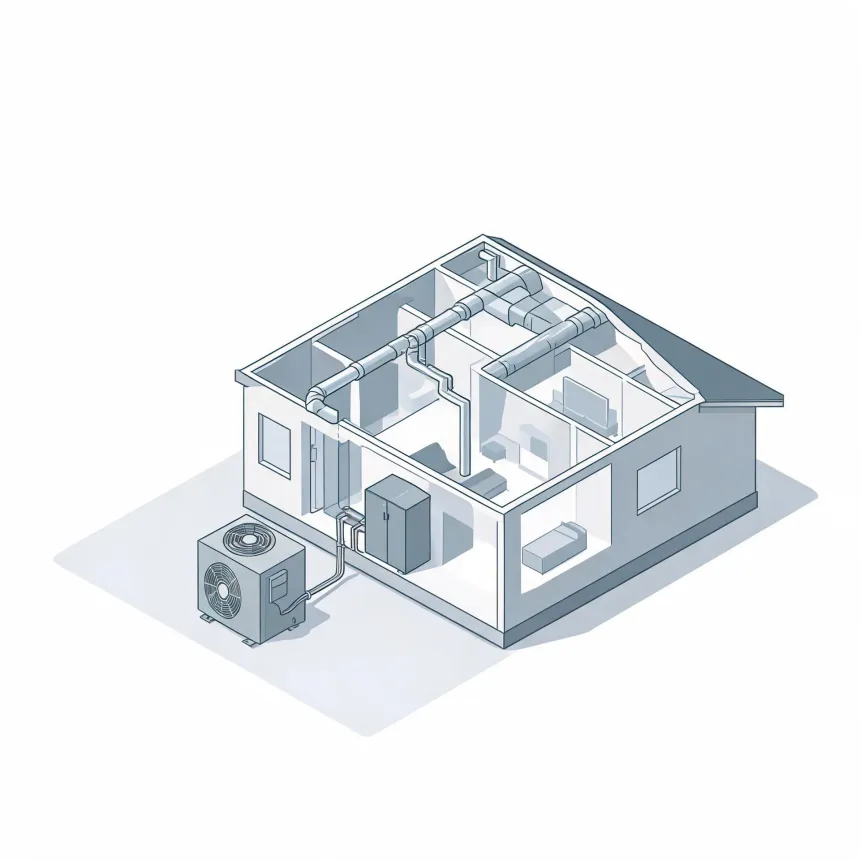
- An air conditioner only cools. A heat pump does the same job in summer, but it can also run in reverse and pull heat from outside air to warm your home in winter. Mechanically the outdoor units look similar, and both use a compressor and refrigerant to move heat rather than generate it. Since homes here need heat six months a year and cooling five, a heat pump covers both seasons instead of leaving you needing a separate furnace or space heaters.
- Does a heat pump work in cold weather?
- Yes, a heat pump keeps working in cold weather, though it pulls less heat out of the air as the temperature drops. Winter nights here average 34°F, which is well within the range a heat pump handles without trouble. Heat pumps installed since January 2023 have to meet a federal minimum of 7.5 HSPF2, a rating that reflects how well they perform across a full heating season, including the coldest nights. If you're ever unsure how a specific model performs at low temperatures, a contractor can walk you through its rated output at different outdoor temperatures before you decide.