Mini Split Installation in Cumming, GA
A new system here will heat from October through April and cool from May through September every year. Tell us about the house, and a licensed contractor who covers Forsyth County will get in touch.
Tell us about the job
It takes about a minute.
A mini-split here runs almost the whole year
Cumming needs heat or cooling twelve months out of the year. Winter nights average 33°F from December through February, and a mini-split's heat pump side has to keep pulling warmth out of that cold air night after night. Summer afternoons average 86°F, and the same unit switches over to carry the cooling load from May through September.
That is seven months of heating and five months of cooling on one machine, with barely a break between seasons. Any mini-split installed new has to meet the federal minimum for a split-system heat pump, 14.3 SEER2 for cooling and 7.5 HSPF2 for heating. Georgia also sees its share of winter storms and damaging wind, and a mini-split that loses power will need to be turned back on rather than restarting on its own.
- 7 months
- October through April, your system heats
- 5 months
- May through September, it cools
- 33°F
- the average winter night it heats against
- 86°F
- the average summer afternoon it cools against
NOAA nClimDiv, 1991–2020 normals
Georgia requires HVAC contractors to hold a state license.
The state board tests the contractor once and keeps that record on file, but the license itself does not follow the crew to your house or get checked on the day of the work. It covers the contractor as a whole, not this particular install.
For a mini-split going in, what actually gets checked on your job is the permit. In most cities and counties in Georgia, installing a mini-split needs a permit from the local building office, and someone from that office comes out to inspect the work once it is done. That inspection is what confirms the line set, the wiring and the mounting were done right, not the license itself.
Source: Georgia Secretary of State
- Is a mini split worth it?
- For most homes, yes, especially in a room an existing system does not reach well. A mini split heats and cools that space directly, without ducts losing air along the way. Cumming homes need heat or cooling all year, seven months of heat and five of cooling, so a unit here runs most months rather than sitting idle. Whether it fits your house depends on layout and what you already have, and a contractor can walk through that with you.
- How many rooms can a mini split cover?
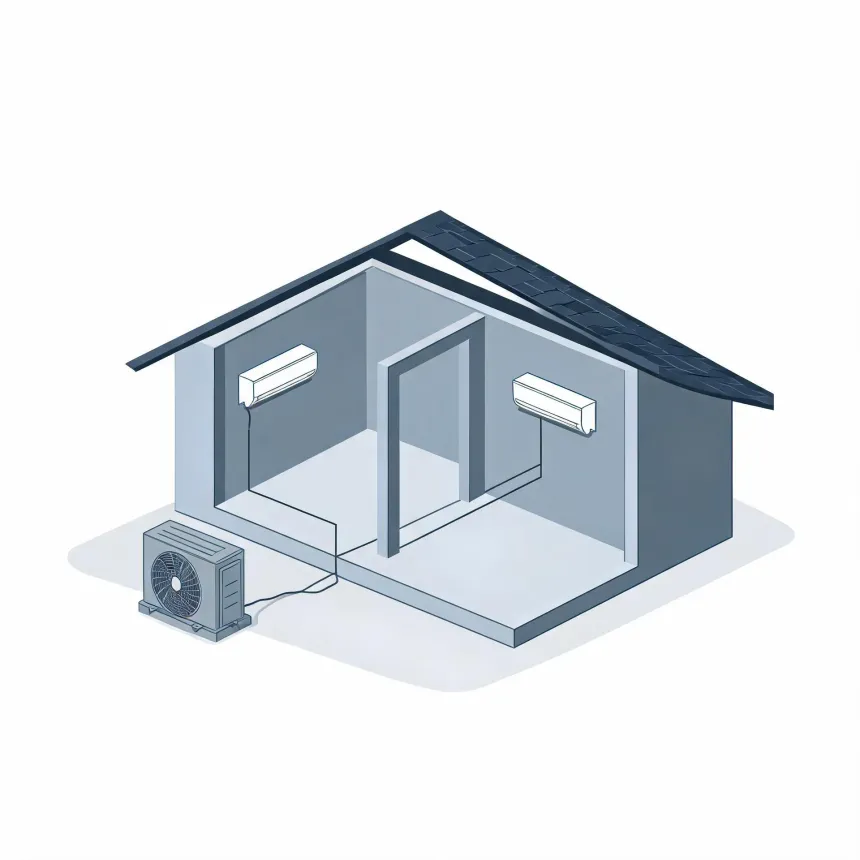
- A single indoor unit heats and cools the one room it sits in. If you need more than one room covered, a multi-zone system runs several indoor units off one outdoor unit, each with its own thermostat. How many zones that outdoor unit can support depends on its size, and a contractor can size that against the rooms you want covered.
- Can a mini split heat a whole house?
- It can, if enough indoor units are installed to reach every room. A multi-zone system covers each room the same way a single unit covers one, just with more indoor heads tied to a larger outdoor unit. Cumming winter nights average 33°F from December through February, so the units chosen need to be rated to keep up on the coldest of those nights. A contractor can work out how many zones and what capacity your house needs.