
Why your vents smell musty in Georgia

Fill out one short form instead of calling around.

Skip the calls

Why do my vents smell musty in Georgia?

You keep catching a musty smell when the air kicks on, especially walking past a vent after the AC has been running a while. It's not strong enough to call an emergency, but it's there every time, and you'd like to know what's actually causing it before you spend an evening trying to chase it down room by room.

Moisture is sitting in your ductwork and growing mold

Georgia summers run muggy, and your AC pulls that moisture out of the air as it cools your home. Some of that water ends up on the coil and in the ducts near it, and if it doesn't drain or dry out fully between cycles, mold starts growing on the duct walls, the coil, or the drain pan. Every time air moves through, it carries that smell into the rooms. A dirty filter makes it worse by slowing airflow and letting the coil stay wet longer. The smell usually means there's standing moisture or mold growth somewhere in the system, not just dust, and it tends to come back on its own until the ducts are actually cleaned out.

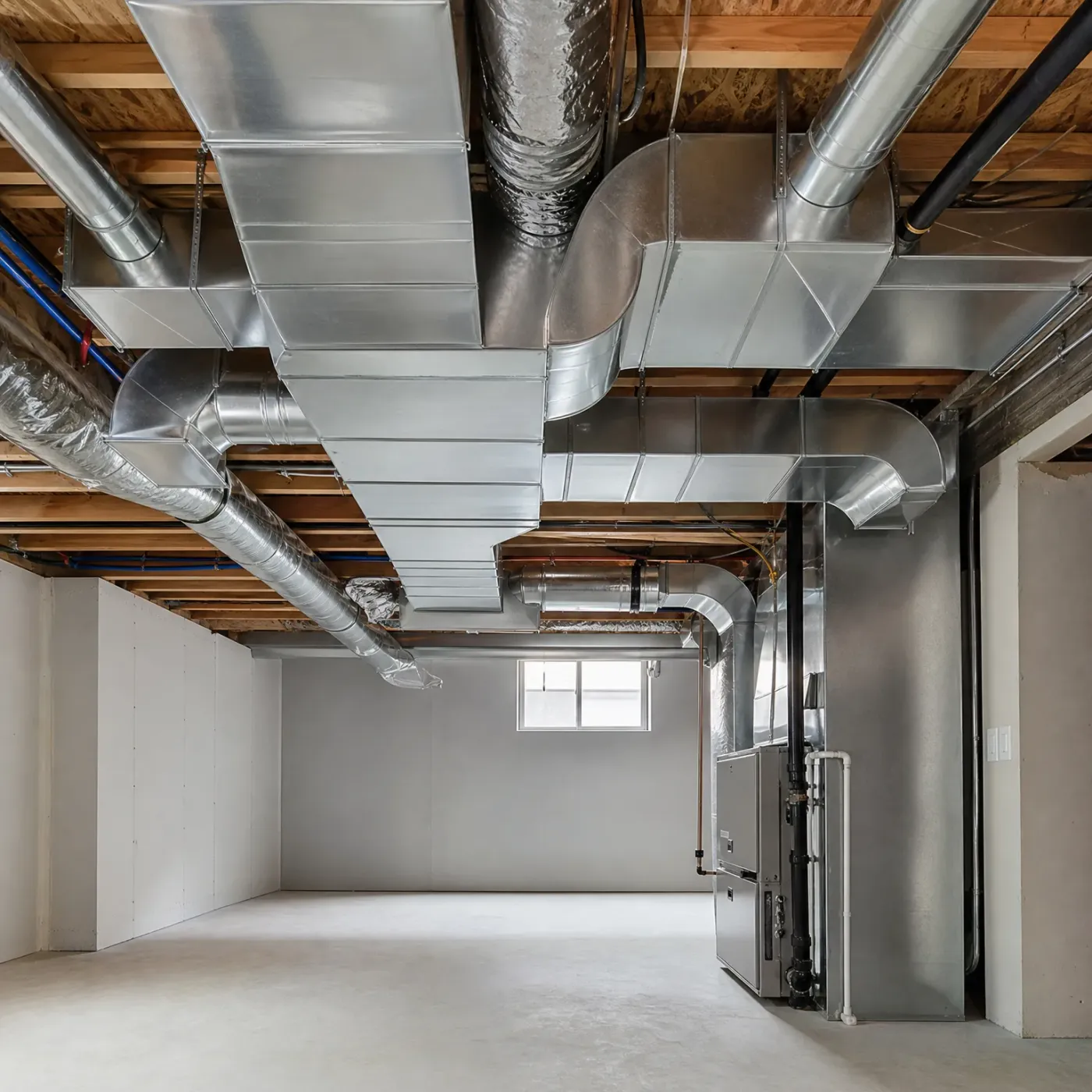
Unfinished basement with exposed wood joists, galvanized sheet-metal ductwork, insulated flex ducts, piping, a small window, and a furnace or air handler against a gray wall.

Air moving clean through the system

Metal ducts and flex runs feeding off a furnace like this move air through without picking up anything extra. No standing moisture, no film on the metal, nothing for mold to hold onto. Air goes out the vent smelling like nothing at all.
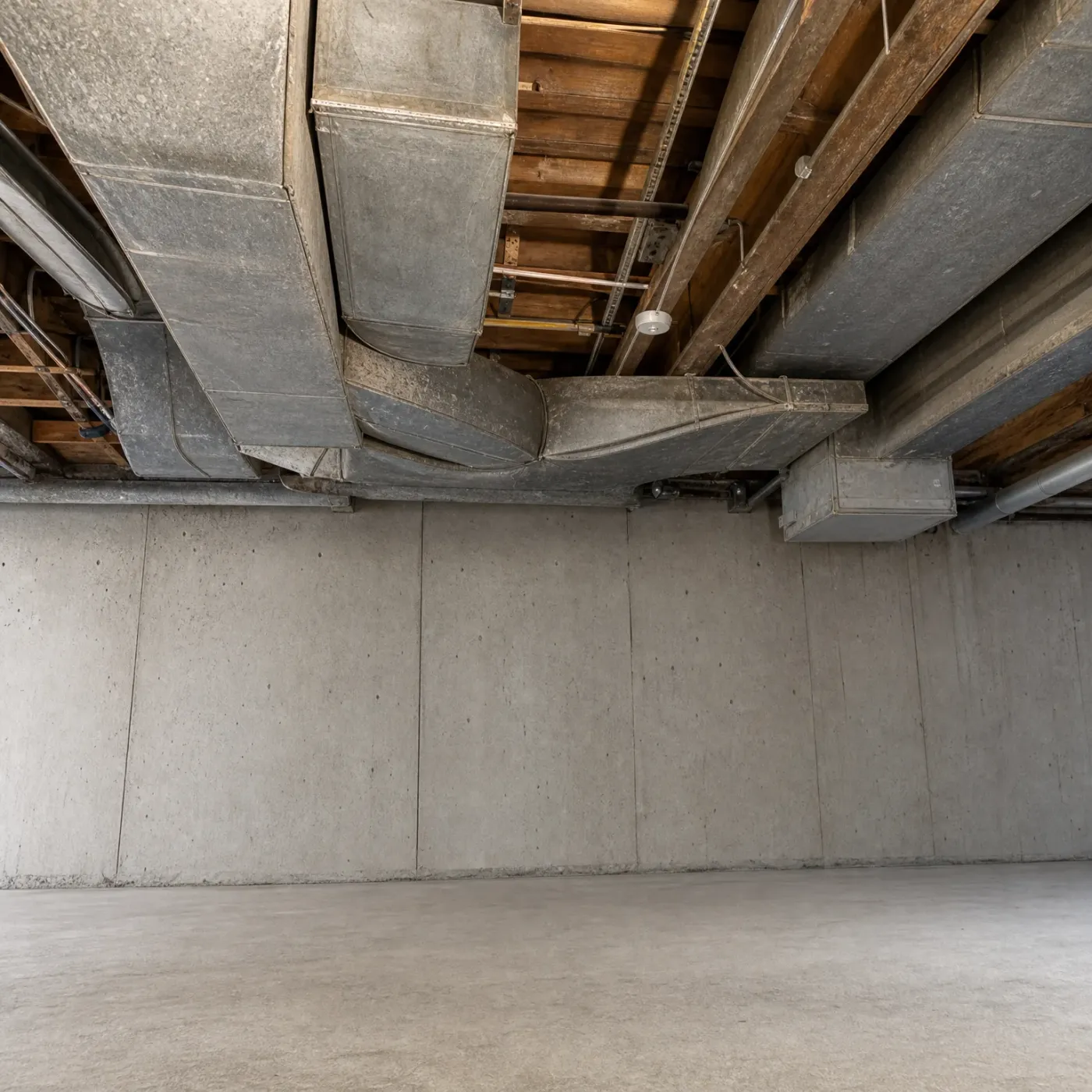
Empty basement room with bare concrete walls and floor, and an exposed ceiling of wooden joists with large galvanized sheet-metal ductwork and pipes.

Moisture sitting where the air runs

Ducts running this low, near concrete and framing, pick up moisture the concrete holds onto long after it rains. That dampness sits against the metal and the wood joists above it. Every time the blower kicks on, it pushes that smell straight to your vents.

Is this smell actually a problem in your house

You notice it most in a closed-up room, or when you walk in after being out all day in the Georgia humidity. A closet near a vent holds the smell longer than the rest of the house. Clothes in a dresser near the return pick it up too, even ones you just washed. Sometimes it's only in one or two rooms, not the whole house, which usually means moisture is sitting somewhere specific in that run of duct rather than spread through the whole system. Left alone, that moisture keeps feeding whatever is growing in there, and everyone breathing that air every night is breathing it too.

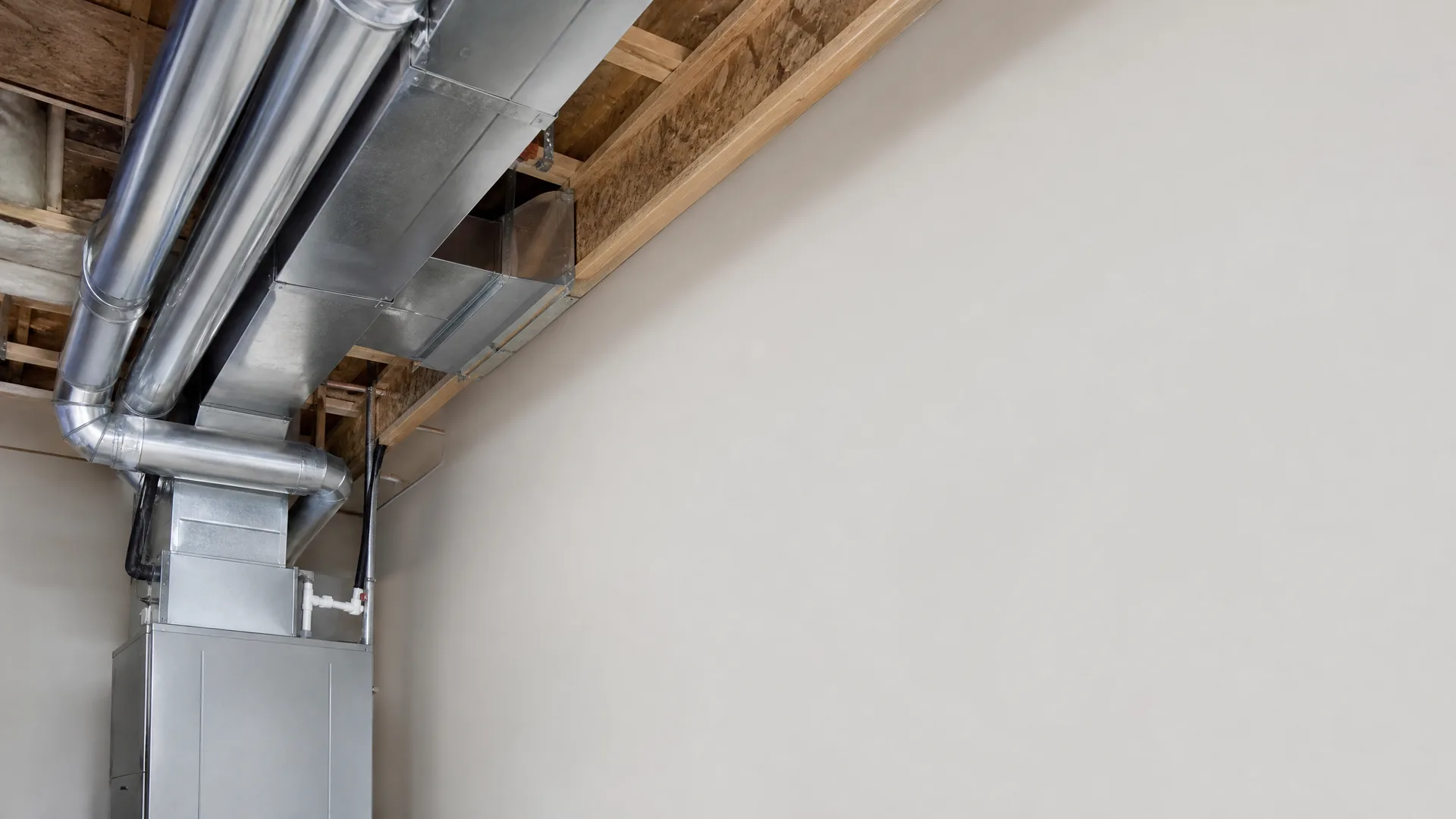
Galvanized sheet-metal ductwork and round pipes running along an exposed wood-joist ceiling with insulation, above a furnace unit beside a blank painted wall.

Where the moisture actually sits

Your AC pulls humidity out of the air and drops it onto the evaporator coil, then that water runs down into a drain pan and out a condensate line. When that line clogs or the pan doesn't drain right, water sits there instead of leaving. Dust in the duct nearby settles into that film and stays wet behind the coil, right where the air for every room passes over it.

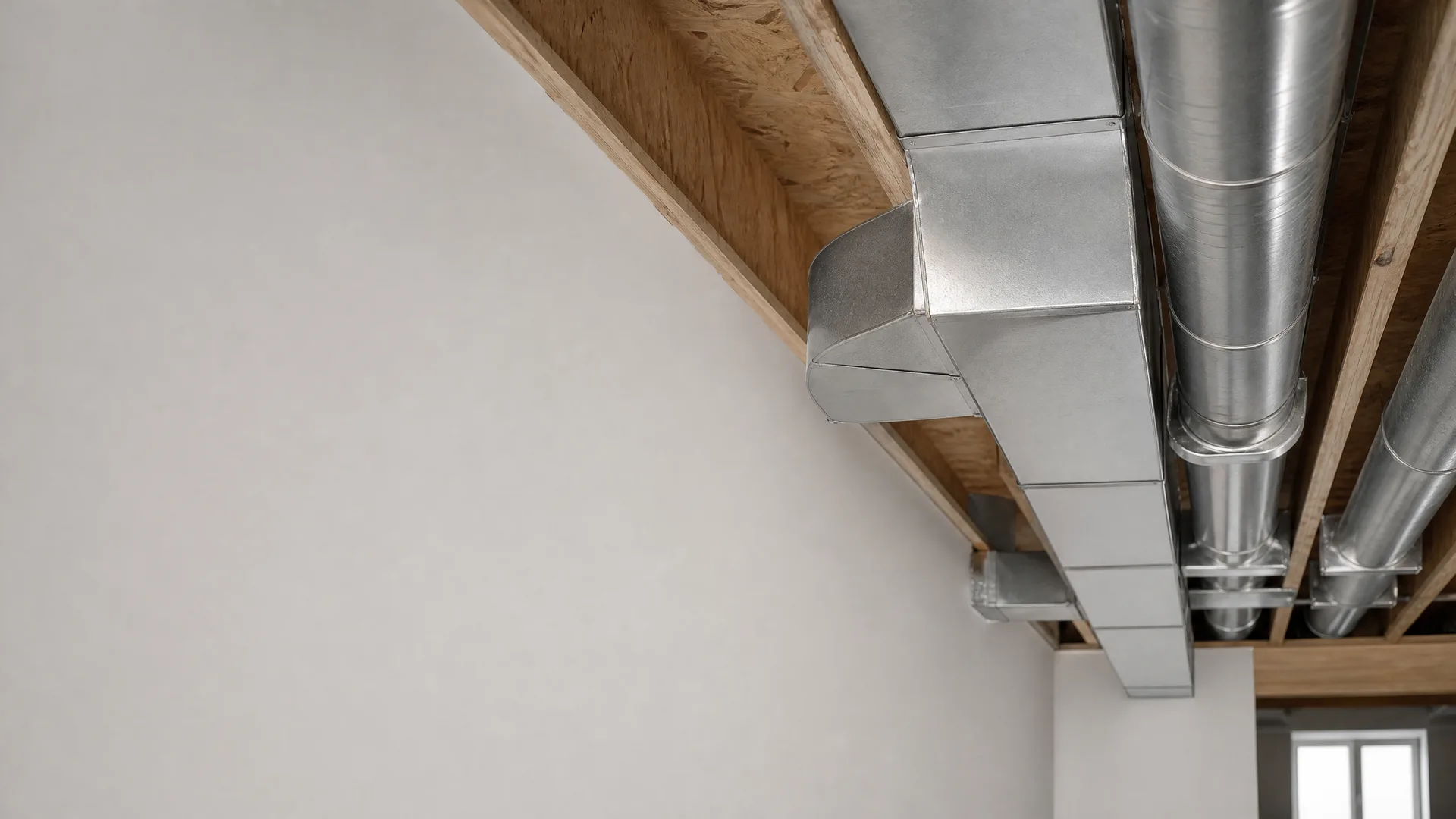
Galvanized rectangular and round sheet-metal ductwork mounted beneath an exposed wooden joist and OSB ceiling, next to a plain white wall and a window at lower right.

What a duct cleaning removes

Cleaning pulls the dust and buildup that's collected on the inside walls of the ducts and around the coil area, the material that's been sitting there holding moisture long after a Georgia afternoon storm has passed. It doesn't change your humidity or fix a drain line problem on its own, but it takes out what's already grown and been feeding on the damp duct surfaces, which is what's riding the air into your rooms.

Power costs 14.74 cents per kilowatt-hour statewide

Georgia homes pay 14.74 cents per kilowatt-hour, and most run electric heat, so that coil and blower run on your power bill most of the year. Running the system harder to push air past a clogged, musty duct costs you more on every bill than a clean system would.

EIA-861 2025 statewide residential average

A smiling bearded man in a dark crewneck sweater sits at a dinner table with a lit candle, glasses of wine and water, and plates of food in the foreground, with a lamp, framed art and a potted plant behind him.
A woman with dark hair in a bun reclines on a gray sofa with her eyes closed and a slight smile, wrapped in a cream knit sweater and blanket, with an open book resting in the foreground and a lit lamp in the dim room behind.

No phone calls to make

Your duct cleaning request goes to one local pro.

It costs nothing to send, and you don't have to hire anyone.

Calling around to find someone

You could start listing duct cleaning companies and calling each one, explaining the musty smell, how long it's been happening, and whether it's just one vent or the whole house. Then you wait on quotes, maybe from three or four companies, trying to compare what each one actually plans to do versus what they're charging. Some won't call back. Some will push extra services you didn't ask about. By the time you've got enough information to pick one, you've spent several evenings on it, and you still don't know if the person showing up actually knows Georgia duct systems or just does whatever job comes in that day.

Matched with someone who already knows this

Instead, you answer a few questions once and get connected to one licensed contractor local to your area, not five companies competing for your callback. Someone who works on duct systems through Georgia summers knows that a musty smell usually traces back to the coil, the drain line, or moisture sitting somewhere it shouldn't, and can check those spots first instead of guessing. You're not fielding calls from multiple companies or repeating the same explanation three times. One contractor, already familiar with what causes this in homes like yours, looks at it and tells you what's actually going on.

Unfinished basement with bare concrete walls and floor, and galvanized sheet-metal HVAC ducts, pipes and wiring running along the wood-joist ceiling.
Before you get your ductwork cleaning
Unfinished basement with concrete walls and floor, a steel beam on posts, and exposed wooden joists with sheet-metal ductwork and piping overhead.
After you get your ductwork cleaning

What the musty smell tells you

  • A musty smell from your vents almost always means moisture sitting somewhere in the duct system, not dirt alone.
  • The coil, the drain pan, and the condensate line are the usual places water collects when it shouldn't.
  • Georgia's humid air gives mold more to work with than it would have in a drier climate.
  • A smell that's faint but constant, especially near one room or closet, points to buildup rather than a one-time event.
  • Cleaning removes what's already built up, but it doesn't stop a clogged drain line from filling again.
  • Running the system harder to push air through a musty duct shows up on your power bill before it shows up anywhere else.

The smell is moisture, sitting somewhere it shouldn't be. Not dirt, not dust, not old air. Somewhere in your system, water is collecting and not draining the way it's supposed to, and Georgia's humidity gives whatever's growing there plenty to work with. That's why it shows up strongest near one vent, or in a closet that stays closed up most of the day. It's not spread evenly through the house because the moisture isn't spread evenly either. It's sitting at the coil, in the drain pan, or in the condensate line, and the air passing over it picks up the smell on its way to that one room.

A cleaning takes out what's already built up in the ducts. That part is straightforward. What it doesn't do is fix a drain line that's clogged or a pan that isn't draining right, so if that's the actual source, the smell can come back even after the ducts are clean. Worth knowing before you book anything, so you're not surprised later.

In the meantime, the system is working harder than it should to push air through ductwork that's partly fouled, and that shows up on your power bill before you ever notice it anywhere else. At 14.74 cents a kilowatt-hour, that's not nothing over a full Georgia summer. The smell is the sign you can notice. The bill is the one you can't, until it arrives.

A smiling woman with long dark hair in a gray sweater sits behind a white countertop holding a glass of red wine, with a dimly lit living room and dark kitchen island in the background.
A woman in a beige knit sweater with her hair up laughs while looking to the side, seated in a dimly lit living area with a sofa, windows and a kitchen counter behind her, a glass of red wine in the lower right foreground.
A woman in a black sweater laughs while seated at a light stone counter with a glass of red wine, in a dimly lit living and dining room with bookshelves, a table lamp and framed artwork behind her.
A smiling woman with long dark hair in a beige sweater sits at a granite counter with a glass of red wine, with a living room, fireplace and dining area behind her.

Ductwork Cleaning

One form, no calling around

The pro who reaches out is licensed in Georgia.

A smartphone with a blank green screen stands upright against a plain light gray background.
Duct and vent cleaningDucts or ventsGeorgia
Step 1 of 2

What ZIP code is the job in?