
Ductwork doing its job
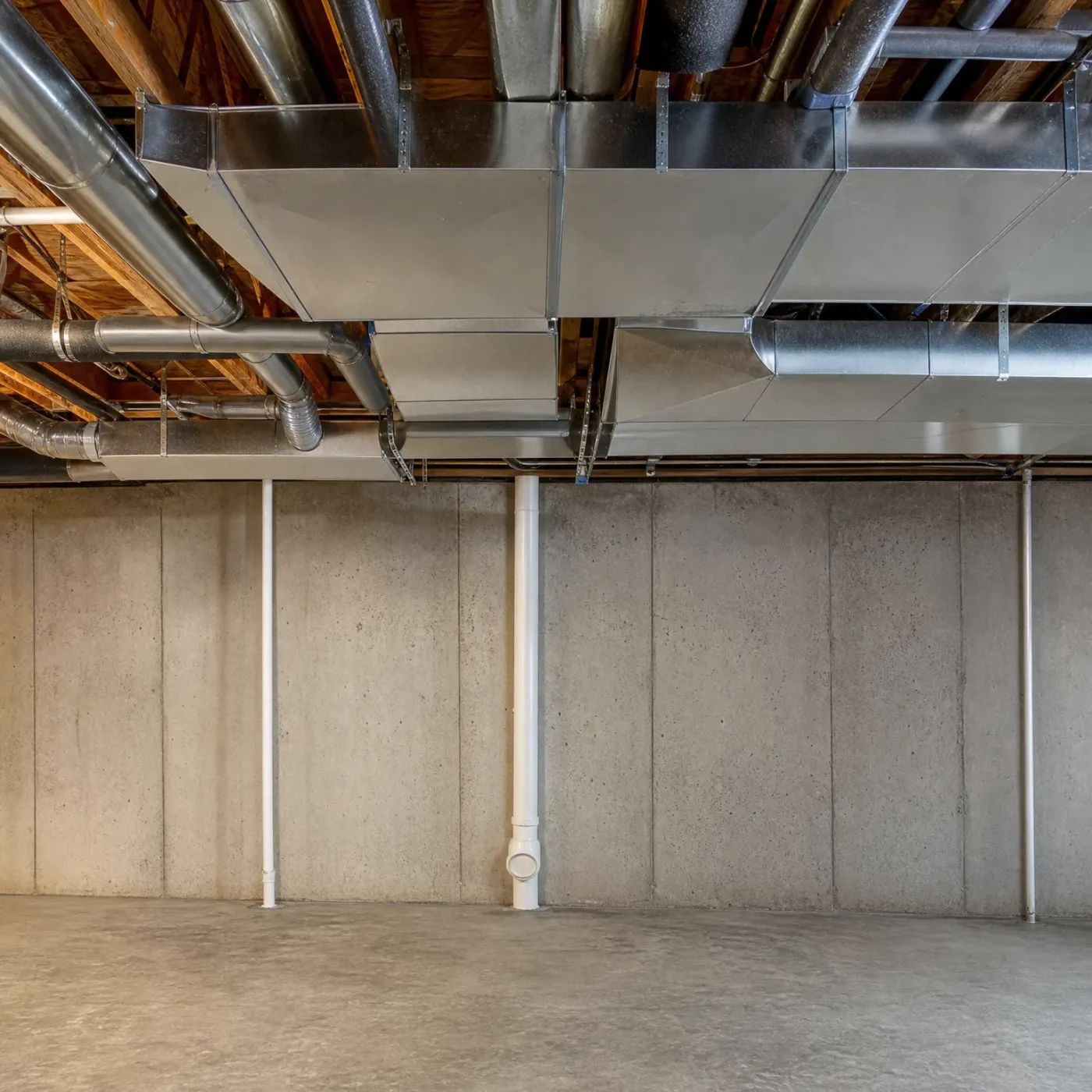
This is what sits under a Mableton house when nothing is wrong. Metal trunk lines and flex duct run clean between the joists, carrying air without adding anything to it. No staining, no buildup, nothing for mold to hold onto.
Get matched with a pro who works on ducts in Cobb County.
Get matchedYou turn on the air and get a damp, musty smell out of the vents, like a basement or an old towel. It usually shows up most when the AC first kicks on, then fades, or it lingers the whole time the system runs. Either way it makes you wonder what's sitting in your ductwork, especially with how long the AC runs here.
The smell is mold or mildew growing somewhere air passes through, most often the evaporator coil or the duct section right after it. Cobb County summers run long and muggy, and an AC system that's cooling for months at a stretch is also pulling moisture out of the air the whole time. That water has to drain somewhere, and if it's collecting instead, on the coil, in the drain pan, in a duct with a low spot, it sits there feeding mold between cycles. A dirty filter makes it worse by slowing airflow across the coil, so it stays wetter longer. The smell means there's an active source of mold in the system, not just dust, and it's worth finding before it spreads further into the ductwork.

The evaporator coil sits wet most of the summer, since it pulls moisture out of the air every time the AC runs. That water is supposed to drip into a pan and drain outside. Dust and dander settle on the wet coil and feed mold and bacteria growing right where your air passes before it hits the ducts. In Mableton, with the AC running long stretches from spring into fall, that coil rarely gets the chance to fully dry out.

The condensate line is a narrow tube, and algae and sludge build up inside it the same way they would in any drain that stays damp. Once it clogs, water backs up into the drain pan and sometimes into the ductwork below the coil. Standing water in a duct does not evaporate the way a wet coil does. It sits there, and anything organic nearby starts to break down, which is often why the smell lingers instead of fading once the system has been running a while.
Half the homes here were built by 1990
Half the homes in Cobb County were built in 1990 or earlier, so the ducts and drain lines in them have had decades to collect the dust that mold needs to grow on.
Heat runs November through April
Heat runs November through April here, six months where the system sits dry and the smell backs off, then the coil goes wet again the day cooling starts back up.
Cooling runs May through September
Cooling runs May through September, five months of the coil staying wet almost every day, which is as much chance as mold needs to take hold and keep coming back.
ACS 2020-2024 · NOAA nClimDiv 1991-2020
The coil is a few square feet of thin metal fins, wet for most of the summer because that's how it cools. Air moves across it, the coil pulls the heat out, and the moisture in that air condenses on the metal and drips down into a pan below. From there it's supposed to run down a drain line and out of the house. Nothing about that process cleans the coil. Dust from the house settles on the wet fins the same way it settles everywhere else, except here it stays damp instead of drying off, and that's exactly what mold needs to take hold. Once it does, every pound of air the system pushes picks up a little of that smell and carries it through the ducts to every room with a vent. The ducts themselves are usually just the delivery system, not the source. If the drain line clogs, which happens as it collects the same dust and mold slurry over time, water backs up into the pan instead of draining out, and that standing water keeps the whole cycle going. Cleaning the coil, the pan, and the line together is what actually stops the smell at the source. A UV light mounted near the coil keeps mold from reestablishing on it between cleanings, which is why it's paired with a cleaning rather than used on its own.




You've already read what's growing in there and why. The part left is what it takes to get rid of it. A coil cleaning, a cleared drain line, duct work if the dust buildup is bad enough. That's three different jobs, maybe three different calls, three times explaining that it's not just a smell, it's mold feeding on wet dust in a system that runs most of the year in Cobb County. Then quotes to compare, schedules to match up, someone to let into the house more than once. None of that goes away because you understand the coil now. Handing it off means one contractor who works on this gets your situation and reaches out, instead of you running down three separate fixes on your own while the smell keeps coming through the vents every time the AC kicks on.
Running the AC in a house that smells like this means every room gets a share of that smell, not just the one near the return vent. It settles into couches, curtains, closets, anything with fabric.
Mold on the coil doesn't stay put. It spreads through the duct system every time the blower runs, which in a Mableton summer is most of the day.


The blower does not know the coil is dirty. It is built to push a set volume of air, so it keeps pushing that same volume through a coil that is coated in biofilm, and whatever is growing on that coil rides along. Mold spores are small and light, light enough to travel the airstream through the supply ducts and come out every vent the system feeds, not just the ones close to the unit. The coating on the coil fins does two things at once. It holds the smell, and it blocks airflow the same way dust buildup on a radiator blocks heat, which is why a cleaning brings back both at the same time. Below the coil, the condensate pan catches the water the coil sheds all summer. When the drain line backs up, that water sits instead of draining out, and standing water next to a damp coil gives mold one more place to take hold. If a return vent sits near a basement or crawlspace with any dampness in it, that space is feeding spores into the ducts before the air ever reaches the coil. A dirty filter adds to it by raising the pressure in the system, which pushes air, and the smell, through any gap it can find.


This is what sits under a Mableton house when nothing is wrong. Metal trunk lines and flex duct run clean between the joists, carrying air without adding anything to it. No staining, no buildup, nothing for mold to hold onto.

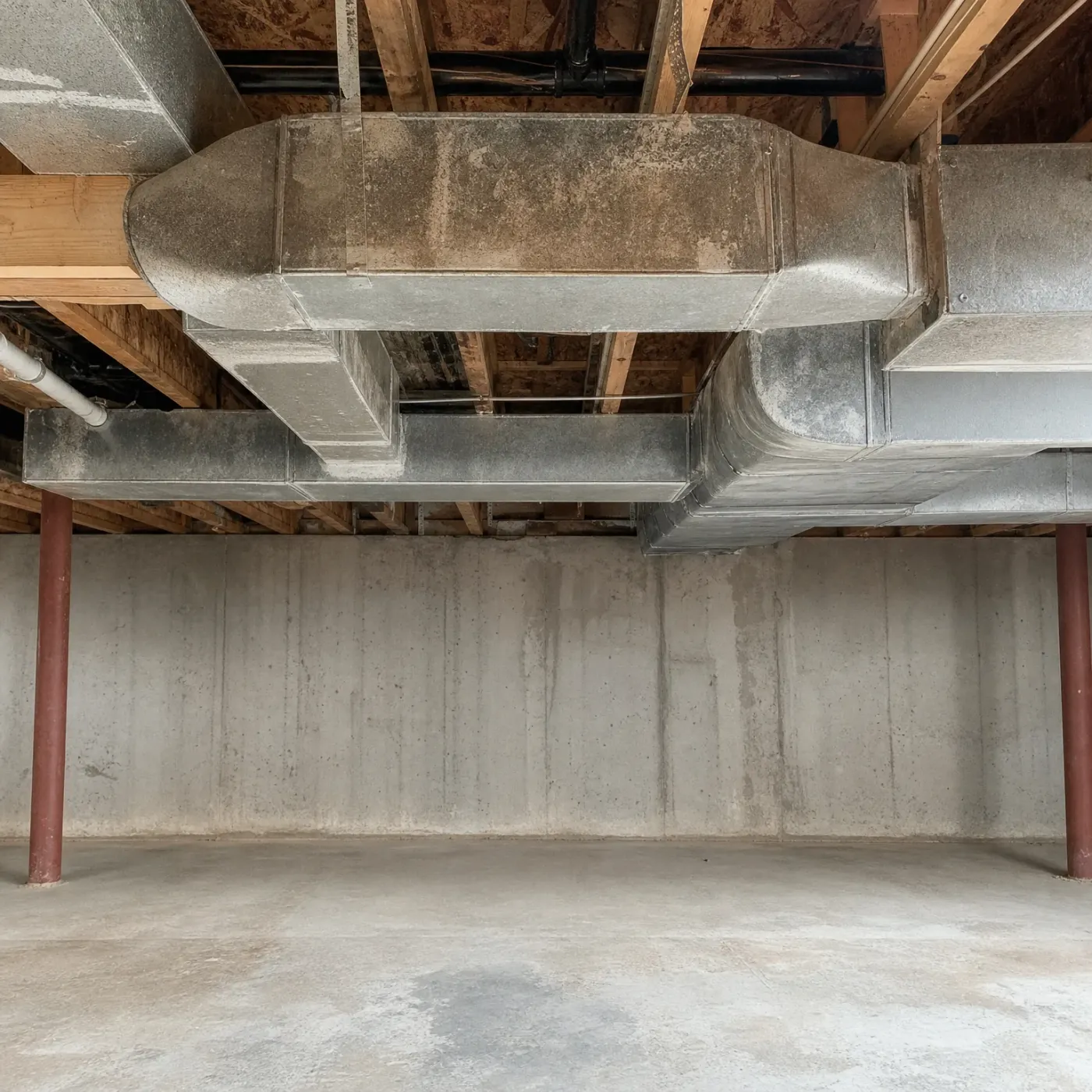
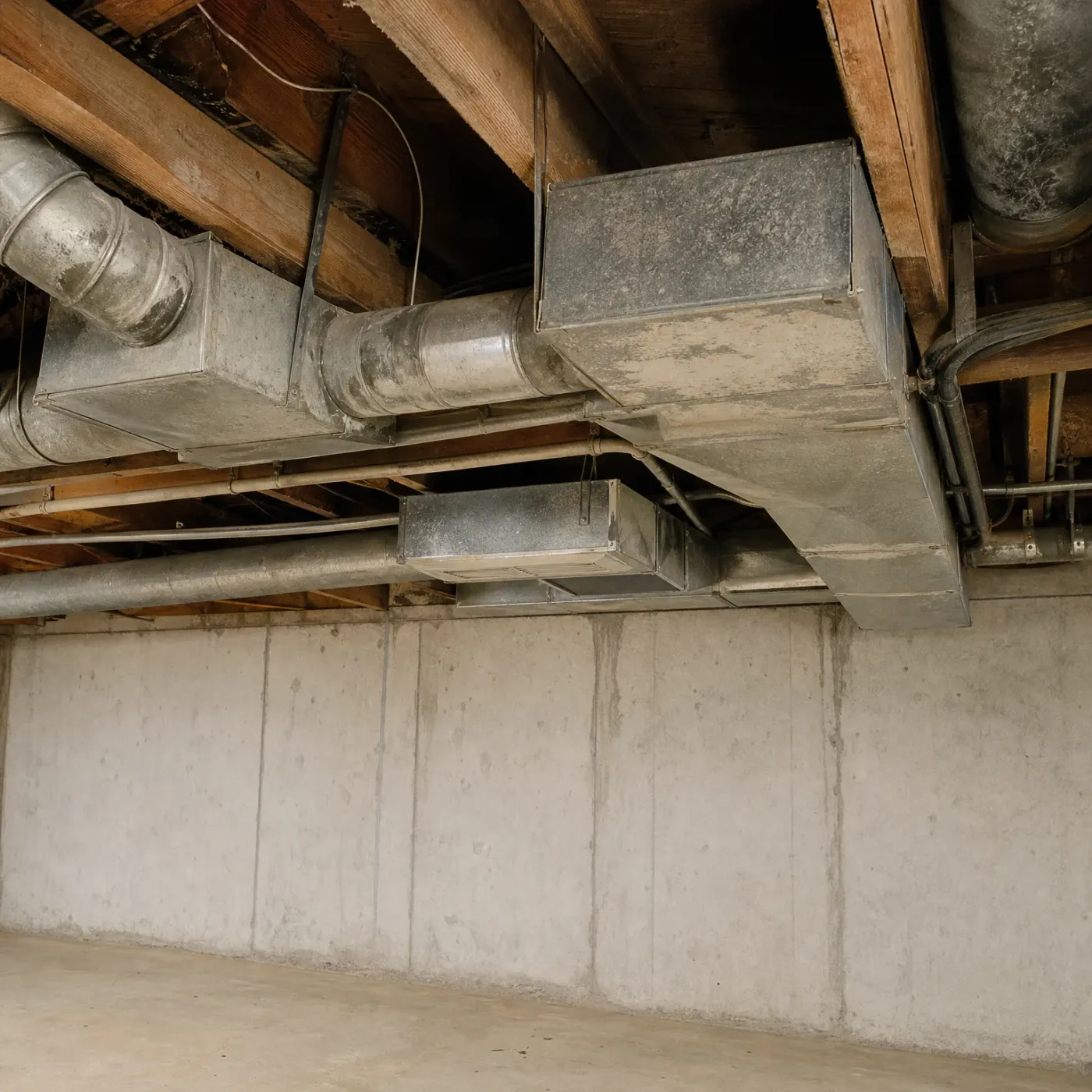
Here the joists and duct surfaces have gone dark where moisture sat too long. That staining is mold taking hold on wood and metal both, and every cubic foot of air pushed past it picks up some of that smell on the way to your vents.
At 13.94 cents per kilowatt-hour, running the blower longer than it needs to run costs you something real. A coil fouled with mold and dust makes the system work harder to push air through, so a cleaning that restores airflow also keeps that number from adding up against you.
EIA-861 2025
The musty smell from your vents comes down to a wet coil, a dust supply, and nowhere for the moisture to go. That combination is what mold needs, and a duct system running since 1990 or earlier has had a long time to build up the dust it feeds on. Cleaning the coil, clearing the drain line, and clearing the ducts if the buildup warrants it takes care of the actual cause. What's harder to sort out on your own is getting there: finding a contractor who handles all three, calling around to see who's available, explaining the smell and when it shows up more than once, then comparing quotes that may or may not cover the same work. You already know what's growing in your system and why. What's left is getting someone out to deal with it, without you having to track down and vet that person yourself.
Find a duct system cleaning pro in Cobb County