A local pro who cleans ducts gets in touch with you.
A musty smell coming from your vents, dark specks around the supply registers, or a damp smell that gets worse when the air handler kicks on. These are the signs that bring most Georgia homeowners to this page. With summers here as muggy as they are, ductwork that runs through a hot attic or crawlspace can collect enough moisture to grow mold, especially if a condensate line has been draining slow or a duct seam has come loose.
You can check some of this yourself. Pull a filter and look at it. Set a flashlight at a return vent and look for staining. But a lot of the duct run is out of sight, behind drywall or buried under insulation, and mold doesn't always show itself at the register even when it's established further back in the line.
That's the gap a contractor closes, not by guessing but by looking. Someone who services ducts in Georgia homes all summer has seen what the heat and humidity here do to a system over time, where moisture tends to collect, and which parts of a typical duct run are worth checking first. That's different from a generic inspection checklist. It's knowing this climate and what it does to this equipment.
When you put in a request here, it goes to one contractor, licensed and working in your area, not a handful of companies competing for your callback. That contractor will reach out to you directly about what they're seeing in homes like yours right now and what it would take to look at your ducts specifically. No promise about what they'll find or what the job runs. Just a straight look from someone who knows what Georgia summers do to a duct system, and a chance to ask them what they're seeing with your setup.
Below, the signs themselves: what to look for, what they usually mean, and when it's worth getting someone in to look closer.
A musty smell when the air handler runs, dark spots around the supply registers, or a damp patch on the ductwork itself are the usual signs. Mold needs moisture, and that moisture is almost always condensation. In Georgia's humidity, any duct running cooler than the air around it will sweat, especially where it passes through a hot attic or crawlspace. That water collects on the inside of the metal or the duct liner, and dust sitting in it is enough to grow mold on. You might also notice it without any smell at all: family members with allergies or asthma getting worse indoors, or a fine layer of dark dust around the vents that keeps coming back no matter how often you clean it. None of this clears up on its own, because the moisture that caused it is still there every time the system runs. Cleaning removes what has already grown, but the registers and any visible duct sections are worth a look first, since that is where mold shows itself before you can see it further inside the line.
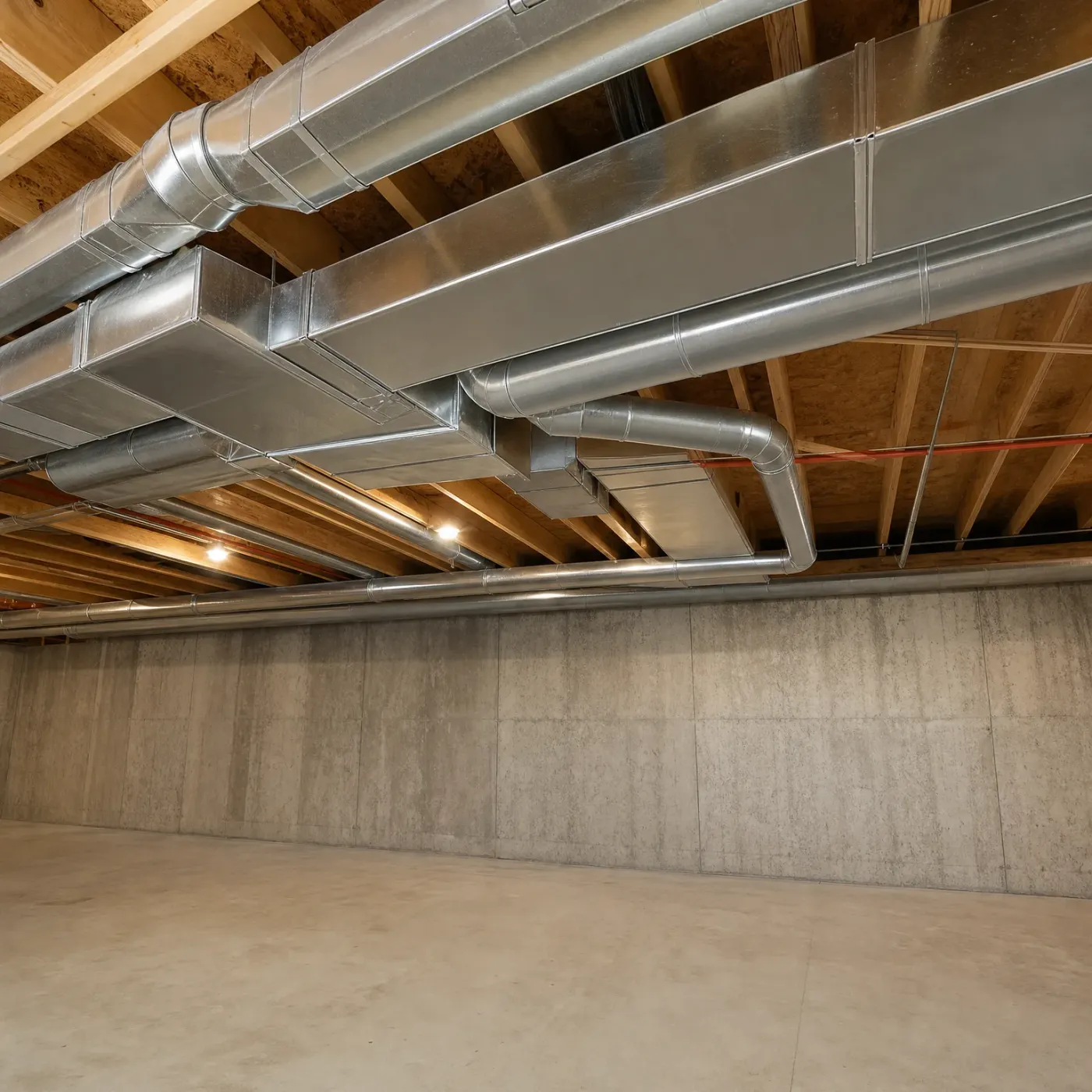
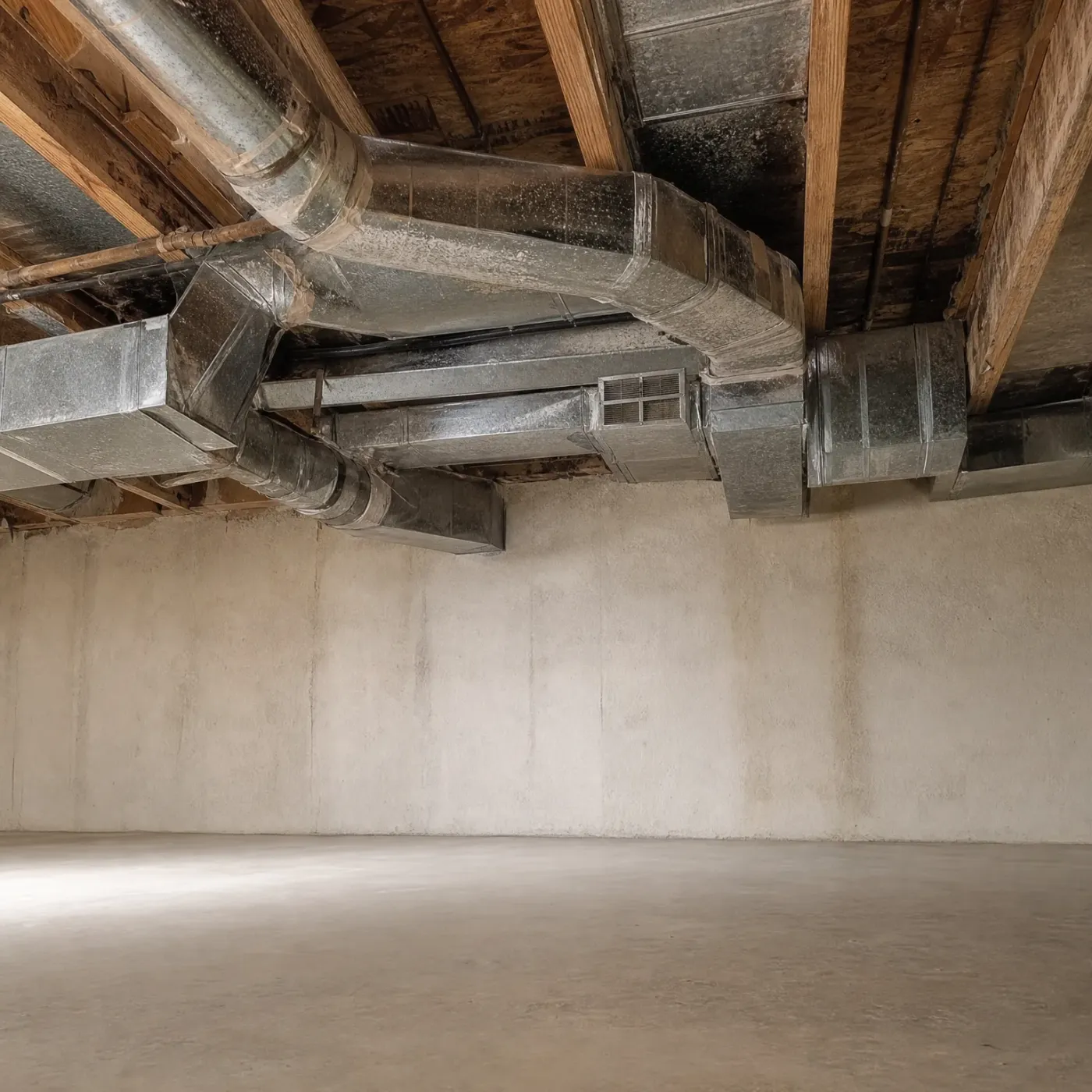
Before you get your ductwork cleaningAfter you get your ductwork cleaning
Why humidity feeds the mold
Mold needs three things: moisture, a food source and a surface to grow on. Your ductwork provides the surface, and the dust inside provides the food. In Georgia, the moisture comes free with the air itself. When cool air moves through a duct, any humidity in the surrounding space condenses on the duct's outer surface or finds its way to a seam. That water sits there in the dark, inside insulation or against metal, and mold takes hold within days, not weeks.
What a closer look turns up
A musty smell or a few dark specks at a register is usually just what's visible from the room. The rest of the system, the return plenum, the coil area, the long runs behind drywall, often shows more once someone opens it up. Flex duct insulation holds moisture longer than sheet metal does, so mold can spread well past where the smell seems strongest. What looks like a small problem at one vent is frequently a bigger one running the length of the duct.
Only one pro gets your request, so you hear from one company.
Asking costs nothing, and the choice to hire stays yours.
Where mold actually grows in ductwork
Condensation forms on the outside of ducts running through a hot attic, not usually inside the metal itself.
Flex duct insulation that's torn or compressed loses its ability to stop that condensation from forming.
A musty smell that fades when the blower shuts off points to the coil or drain pan, not the ducts.
Mold on the supply side spreads spores into every room the system feeds; mold on the return side pulls spores back through the blower.
A leaking duct joint near the air handler lets humid attic air get pulled into the system instead of pushed out.
Dark staining at the register boot usually means water is pooling there, not just dust collecting.
Most of what grows in a duct system isn't inside the metal at all. It's on the outside of ducts that run through a hot attic, where warm air outside meets cooler air inside and leaves condensation behind the same way a cold glass sweats on a summer porch. Flex duct relies on its insulation wrap to stop that from happening, and once that wrap is torn, crushed under a storage box, or compressed where someone stepped on it, the bare duct underneath starts sweating again every time the system runs.
Where the smell shows up tells you something too. If a musty odor is there the moment the blower kicks on and gone soon after it shuts off, the ducts are the more likely source. If it lingers after the system has been off for a while, the problem is more often the evaporator coil or the drain pan underneath it, both of which hold standing moisture longer than ductwork does.
It also matters which side of the system is affected. Mold growing on the supply side gets blown out into every room the ductwork feeds. Mold on the return side gets pulled back through the blower and recirculated before it ever reaches a room. And a leaking joint near the air handler, especially one on the return side, can pull humid attic air into the airstream instead of keeping it out, feeding the problem instead of fixing it.
1
Moisture settles on duct surfaces faster than the airflow can dry it.
2
Dust and debris in the duct give mold a food source.
3
Mold colonies spread along the duct lining and insulation.
4
Spores travel through the supply registers into the room air.
Power costs 14.74 cents per kilowatt-hour statewide
At 14.74 cents per kilowatt-hour, running your air handler longer than it needs to shows up on the bill fast. A duct system clogged with mold-laden dust makes the blower work harder to push air through, so cleaning it out is one less reason that fan has to strain all summer.
EIA-861 2025 statewide residential average
Clean metal, clear air
Bare galvanized duct, dry to the touch, with no staining on the seams or at the joints. Air moves through without picking up dust or odor along the way. This is what a system looks like when condensation isn't finding a place to sit.
Dark staining along the seams
Dust built up on the duct exterior holds moisture longer, and you can see it in the dark streaks following the seams and joints. Once a duct looks like this on the outside, the inside has likely been wet for a while too.
A musty smell is the system telling you something
A musty smell, dark specks at the register, a damp patch on the duct itself. Any one of those is reason enough to get the system looked at instead of waiting to see if it gets worse. In a Georgia summer it usually does.
What's inside your attic and how your ducts were run isn't something a page can tell you. A local contractor who works on duct systems through the summer every year knows what tends to fail in homes around here and what to check first. Get matched with one, and that's who calls you, not a list of companies competing for the job.
Ductwork Cleaning
Get your ductwork to the right pro
Describe your ductwork job, and a local pro who handles it gets in touch.
Say what's going on with your ductwork, and a pro who works on them reaches out.
After you send the request, you're done searching.
Send the form and the duct cleaning stops sitting on your list.
Answer a few questions about the duct cleaning and skip the search.
Answer a few questions instead of calling shop after shop.
Your duct cleaning request goes to one local pro.
Your request goes to one pro, not a list of companies.