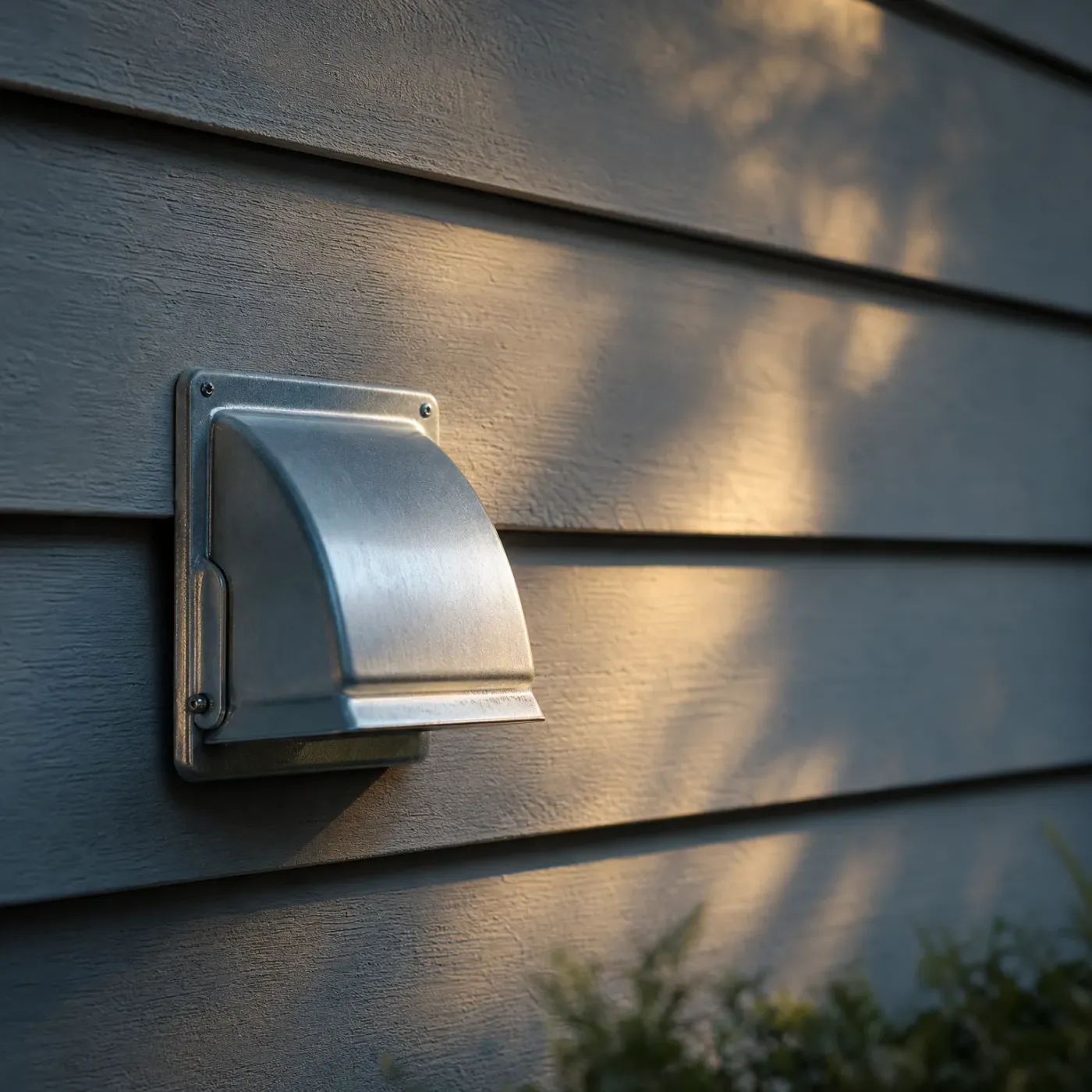
The flap opens and closes like it should
This is what a clear vent looks like from outside. The flap swings open while the dryer runs and drops shut when it stops. No lint around the edges, no staining on the siding or the ground below it.
Finding a pro stops being your job
A clogged dryer vent shows up as clothes that take two or three cycles to dry, a laundry room that gets hot while it runs, or a burnt smell near the machine. This page covers what to check before it becomes a fire risk. When you're ready for someone to clear it, send the form and stop chasing down DeKalb County contractors yourself.
Let a pro reach outA clogged dryer vent slows the air that is supposed to carry hot, damp air outside, so the dryer runs longer and hotter to do the same job. You will notice clothes still damp at the end of a normal cycle, the outside vent hood flap barely moving or not opening at all, and lint collecting around the hood or just inside it. The top of the dryer may feel hot to the touch, and the laundry room can turn muggy fast, which stands out here since summers in Stonecrest already run long and sticky and the extra humidity has nowhere to go. A burning smell is the clearest warning, since trapped lint is what catches fire. None of this means the dryer itself is failing. It means the vent is restricted somewhere between the back of the machine and the outside wall, and until that's cleared, every load will take longer and the risk keeps building.




Walk in while the dryer is running and feel the air. If it is noticeably hotter than the rest of the house, or the machine itself is hot to the touch on top, that is heat with nowhere to go but back into the room. Touch the outside vent hood too. Air should push out against your hand; if you feel almost nothing, the path is blocked somewhere between the drum and the outside wall. You might also notice more lint than usual around the lint trap door, or a burnt dust smell when a cycle ends. Left alone, that trapped heat is what starts dryer fires, especially with the longer, hotter cycles a clogged vent forces.

Go outside and look at the hood where the vent exits the house. With the dryer running, that flap should swing open and stay open while air pushes past it. If it barely lifts, or you feel only a weak puff of air with your hand near it, lint is sitting somewhere in the run between the dryer and that hood. A clear vent pushes that flap open hard enough that you can feel the air from several inches away.

Lint is dry and it burns easily. Most of it gets caught by the lint trap, but some always makes it past into the vent itself, and over time it builds up along the inside of the duct. A long or bent vent run traps more of it than a short, straight one. That buildup is exactly what a dryer vent cleaning removes, clearing the path so air moves the way it is supposed to again.
Some laundry rooms sit right next to an exterior wall, so the vent run is short and straight. Others are stuck in the middle of the house, and the vent has to snake through the attic or across a long stretch of ceiling to get outside. If your setup is the second kind, it's worth knowing how much that distance and those turns work against you.
There is no single length where a vent suddenly becomes a problem. What matters is how far the air has to travel and how many turns it makes getting there. Every elbow slows the air down and gives lint more chances to settle instead of blowing through to the hood outside. A dryer in a laundry room on an exterior wall, venting straight out, deals with a lot less resistance than one venting up through two floors and across an attic. If your run has several bends or covers real distance, lint builds up faster in the low spots and at each turn, and the vent is worth checking more often than you might think to.

This is what a clear vent looks like from outside. The flap swings open while the dryer runs and drops shut when it stops. No lint around the edges, no staining on the siding or the ground below it.

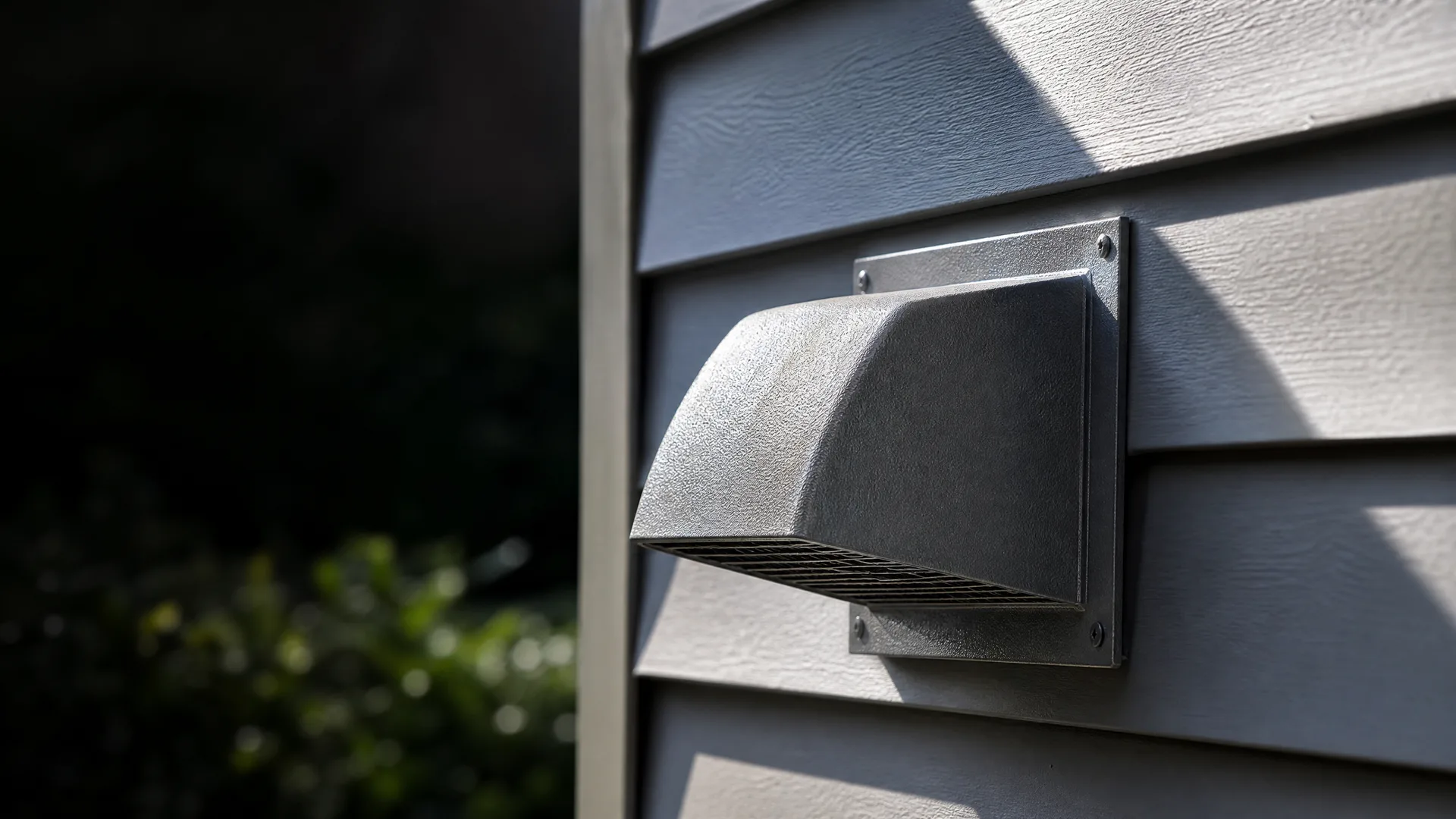
Here the flap can barely move because lint has packed in around the opening. Some of it has blown out and stuck to the foundation below. Air is not getting out the way it's supposed to, and that lint is a fire risk sitting right at the exterior wall.
2.63 people per household on average
DeKalb County households run 2.63 people on average, which means loads of towels, sheets, and school clothes stacked up most days. A slow dryer falls behind fast.
Half the homes here were built by 1984
Half the homes in DeKalb County were built in 1984 or earlier. Vent runs in older houses have had decades to gather lint in bends and joints you can't see.
Power here costs 15.79 cents per kilowatt-hour
Electricity here runs 15.79 cents per kilowatt-hour. A dryer pushing through a clogged vent pulls that rate for an extra cycle every time clothes come out damp.
ACS 2020-2024 · EIA-861 2025


Explain the job once and skip repeating it on every call.
You only hire the pro if you want to.
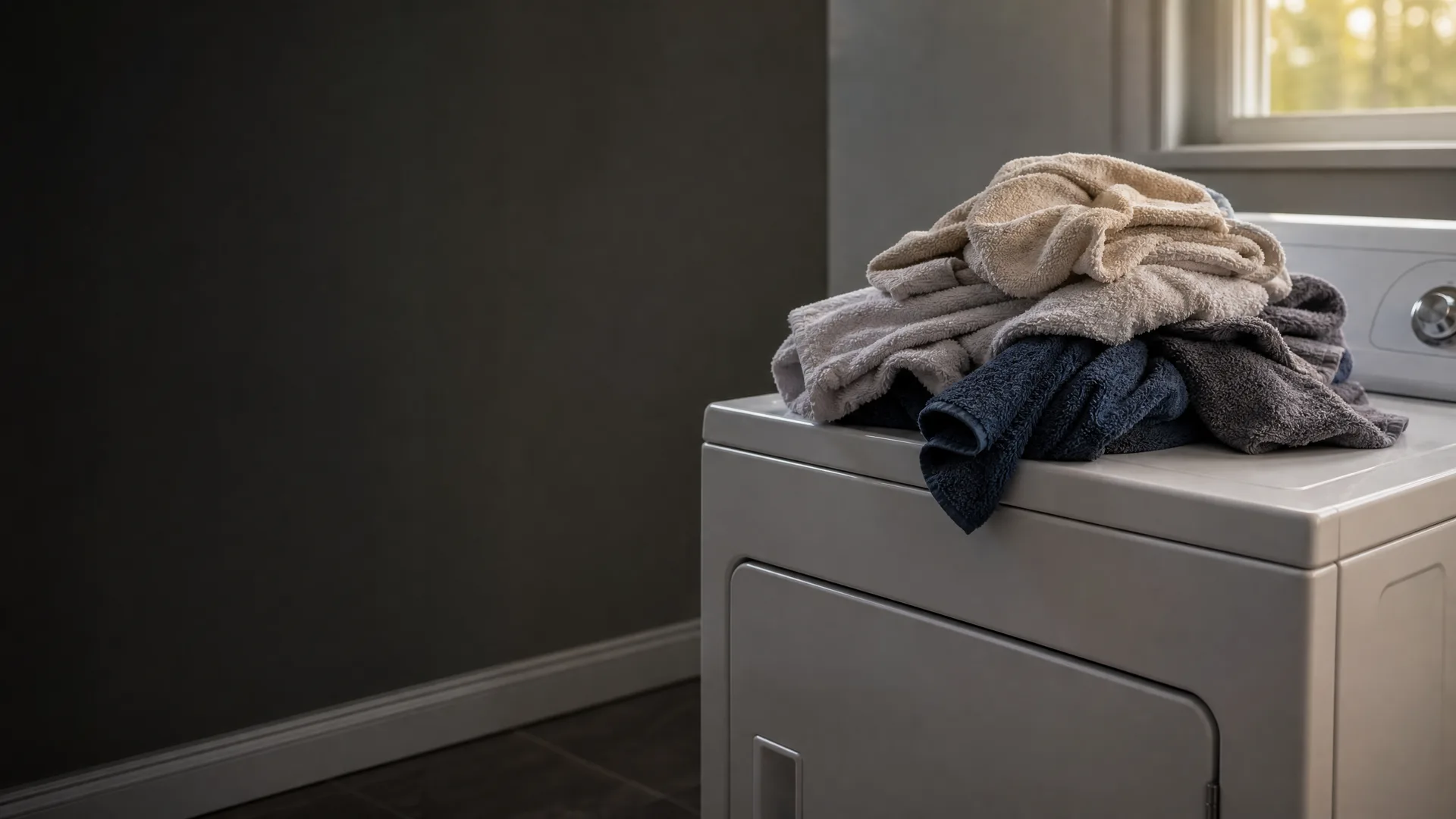
It's almost nine on a Tuesday and you're still in the laundry room. The dryer's been running since before dinner and the towels on top of it are still damp enough to feel cold through the terrycloth. You've run this load twice already. The air in here is thick, warmer than it should be with the door open to the hall, and the window's fogged a little at the bottom. You push the damp heap off the top of the machine and start sorting what can go a third round from what you'll just hang on the shower rod tonight. Outside, DeKalb County's gone quiet and dark, and tomorrow's school clothes are somewhere in that pile.

Right now it's extra loads, extra time standing in a hot laundry room, extra quarters in energy if you track that kind of thing. A family going through towels and school clothes every day doesn't get to just skip laundry until someone deals with it. You run the cycle again, and again, and the dryer keeps working harder than it should to finish a load that used to take forty minutes.
The part that actually wears on you is everything before the cleaning happens. Searching for someone who does this work, calling a few places, explaining the same thing about the hot laundry room and the weak airflow outside, then comparing quotes that all sound a little different. Send the form here and that part is done. You're not left hunting for a name in the phone book or waiting on hold to describe your vent hood flap one more time.

At 2.63 people, most houses here are doing laundry most days, not once a week. That steady pace means lint builds up in the vent faster, and a slow dryer has less room to catch up before the next load goes in.
ACS 2020-2024
You can pull the dryer out, disconnect the vent at the back, and vacuum out what you can reach. A long flexible brush helps if the run is short and mostly straight. This clears lint near the machine and at the wall, and sometimes that's where most of it sits. What it won't do is reach lint packed further down the line, especially if the vent bends through a wall or runs up through the attic before it gets outside. You also won't know for sure the full length is clear when you're done.
A contractor runs a brush the full length of the vent, from the back of the dryer to the hood outside, and checks that the flap opens all the way once it's done. This catches lint sitting in bends and long runs that a vacuum can't reach, and it tells you the vent is actually clear, not just clear near the ends. It takes someone coming to your house and doing the work, instead of an afternoon with a vacuum and some guessing about what's still stuck further in.


Everything points to one problem. Clothes that need a second or third cycle, a laundry room that heats up while the dryer runs, a hood flap outside that barely lifts: that's a vent that can't move air the way it should. The dryer isn't broken. It's working against a blockage, pushing hot air into a run that won't clear it fast enough, so it runs longer and hotter to finish the same load it used to finish in one cycle. That extra heat and the lint causing it are the same thing that turns a slow dryer into a fire risk, which is why this isn't one to leave for next month.
Checking the hood flap from outside while a load runs will tell you in under a minute whether air is moving the way it should. Pulling the dryer out and vacuuming the first few feet of vent helps with what you can reach, especially if your laundry room sits against an exterior wall and the run is short. It does less for a vent that bends through the middle of the house, where lint settles in the turns you can't get a brush into.
At that point you're not guessing anymore. You know the signs, you've checked what you can from both ends, and what's left is getting the vent itself cleared out, start to finish, instead of just the parts within reach.
One request and it's handed off