

The vent clear
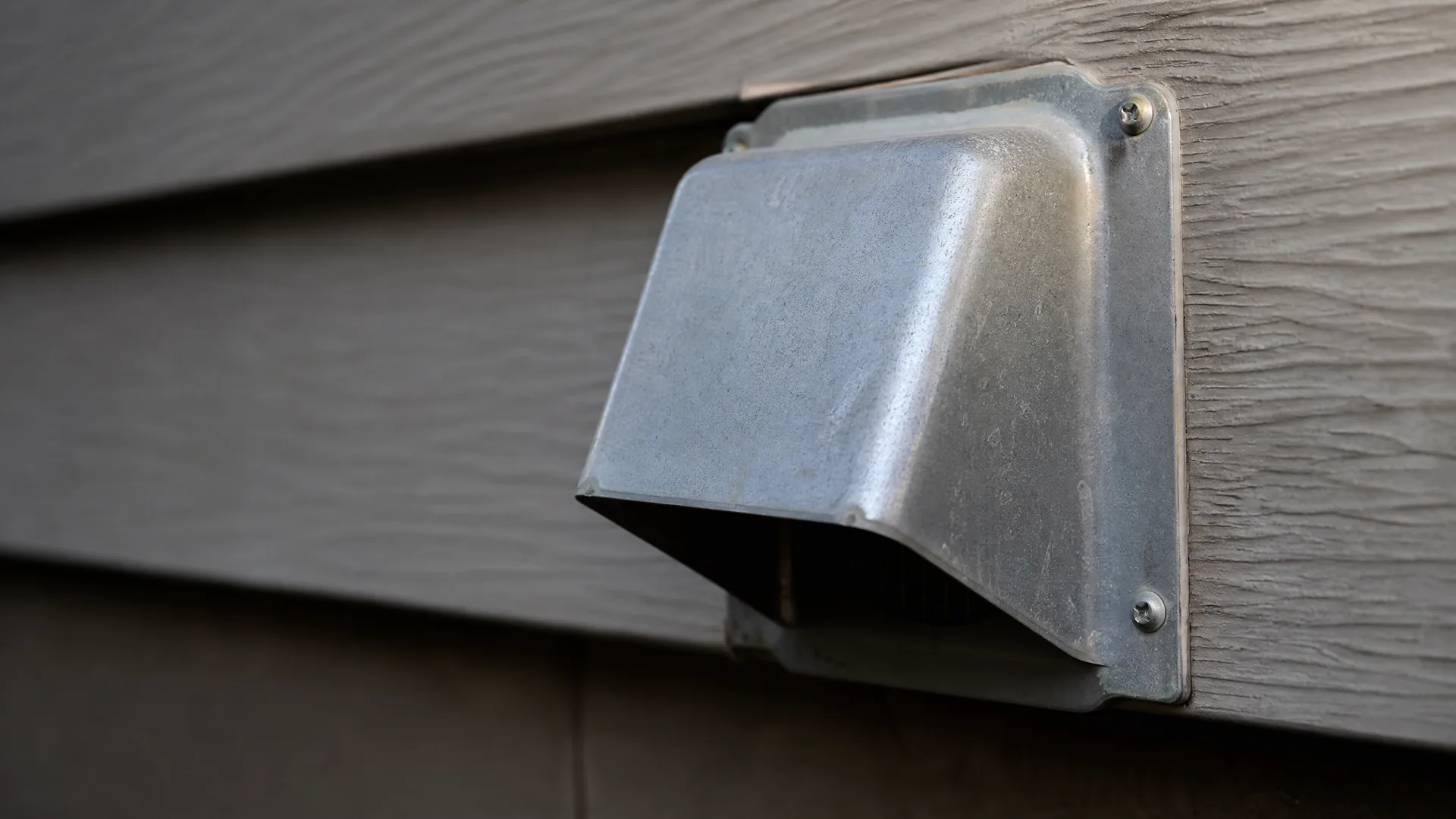
This is what a clear vent looks like from outside. The hood sits flush against the siding and the louver hangs open, ready to swing with the airflow. Warm air from the dryer pushes it open and leaves right away.
Yes, and in Chatham County it matters more than people think. Summers here are long and muggy, which means the dryer runs often, and a vent choked with lint takes longer to clear that wet air out. Heat builds up inside the duct instead of leaving the house. That heat has nowhere to go but back toward the lint trap and the drum. Most homes here run electric, and electric dryers still generate plenty of heat against a blocked vent. Power costs are high in this area too, so a dryer straining against a clogged line is also running up the bill while it works harder than it should. You do not have to figure out whether your vent is the problem or how bad it is. Send in your information and a contractor who handles vent cleaning in the Savannah area will reach out to look at your setup directly. That is one less thing on your list.
You run a load of laundry most days and the dryer feels like it takes longer than it used to. Someone mentioned the vent should be cleaned out, but it sounds like a chore you can put off. You want to know if this is actually dangerous or just a maintenance suggestion.
Lint is dry and it burns fast. Every load sends more of it into the duct, and what the trap catches is only part of it. The rest builds up along the vent walls. When that lint piles up, hot air from the dryer can't escape the way it should. It sits in the duct instead, and the heating element keeps working against that trapped heat. That's the setup for a fire. The U.S. Fire Administration lists dryers as a leading cause of home fires, and a blocked vent is behind most of them. In Chatham County, where humidity keeps dryers running long and often, lint builds up faster than people expect. A vent that worked fine last year can be dangerously restricted now.
Lint builds up inside the vent duct with every load.
Airflow slows, so the dryer runs hotter and longer.
Heat and lint collect near the duct hood or damper.
Trapped heat ignites the lint built up inside the duct.


You already know your own laundry routine better than anyone, and that routine is where the warning signs show up first. A dryer that used to finish in one cycle and now needs two is working against a duct that isn't moving air the way it should. Step outside and check the vent hood. If lint is sitting around the opening or the flap doesn't move freely, air has been fighting its way out for a while. Inside, pay attention to the laundry room itself. If it runs warmer than the rest of the house during a load, that's heat the vent isn't carrying outside fast enough. With a dryer running most days through a long Chatham County summer, lint has that much more chance to build up between checks, so the gap between when a problem starts and when someone notices it can stretch out. Two signs call for stopping the dryer right away rather than waiting. A burning smell during a cycle means lint is heating up inside the duct at that moment. Clothes coming out hot to the touch, hotter than a normal dry cycle leaves them, is the same heat showing up somewhere you can feel it. None of these signs on their own means a fire is coming, but together they describe a vent that isn't doing its job, and that's worth having looked at.
2.4 people per household on average
Chatham County households average 2.40 people, so most dryers here are running loads for a family, not just one person, day after day.
Half the homes here were built by 1986
Half the homes in Chatham County were built in 1986 or earlier. A vent that old has had decades to collect lint in bends nobody can see.
Power here costs 16.10 cents per kilowatt-hour
Electricity here runs 16.10 cents per kilowatt-hour. A dryer straining against a blocked vent pulls more power every time it runs a second cycle.
ACS 2020-2024 · EIA-861 2025
A dryer vent pushes air against gravity or around bends more often than people realize, and every foot of lint buildup makes the motor work harder to force air through.
That extra strain is what turns a slow-drying nuisance into a fire hazard, because the heat has nowhere to go but back into the duct and the machine itself.





This is what a clear vent looks like from outside. The hood sits flush against the siding and the louver hangs open, ready to swing with the airflow. Warm air from the dryer pushes it open and leaves right away.

Lint has built up behind the louver until it pushes out past the hood itself. Air can barely get past it, so the heat and moisture from every load have nowhere to go but back into the duct.


Send the form and the dryer vent cleaning stops sitting on your list.
No fee to send it, and nothing to sign.
A vent that only needs the lint trap cleared and the outside hood checked is something you can likely manage on a Saturday afternoon. Pull the trap, wipe it down, step outside and make sure the hood louver swings freely and nothing is nesting in it. If the duct run is short and straight, a vent brush kit reaches most of it from either end. That covers a lot of houses in Chatham County where the dryer sits near an exterior wall and the run is only a few feet.
Half the homes here were built in 1986 or earlier, and a vent that old has often picked up bends, extra length, or a run that was never meant to carry this much lint over the years. A brush from one end won't reach lint sitting past a turn, and pushing it blind can tear the duct instead of clearing it. A contractor brings a longer rod system and a camera to see what's actually built up and where. If you send in a request, a contractor matched to your situation will reach out, and from there it's off your list.
At 2.4 people, most houses here run a load almost daily, sometimes more with towels and sheets in the mix. Every one of those loads pushes lint further into the duct. A vent that never gets a break has less time for heat to clear out between cycles.
ACS 2020-2024

This is a dryer vent doing its job. The hood sits flat against the siding and the louver swings free. Warm, damp air pushes it open after every load and closes it again once the dryer stops. Nothing is holding it shut.

Here the flap cannot close. Gray lint has built up thick enough to prop it open on its own, with no airflow behind it. That lint sits right at the duct opening, the hottest point in the system, waiting for a spark.


If the hood louver swings freely and the trap just needs clearing, a shop vac and a trip outside to check the vent hood may be all it takes.
If the dryer runs long, the laundry room feels hot, or the vent run is long or bent, a contractor can check the full length of the duct, not just the ends.

Lint blocks airflow, heat builds up with nowhere to go, and that heat is what starts the fire. That's true in any house, and it's true here, where long muggy summers keep the dryer running and a vent that's already slow to clear has even less room to work with. A dryer that runs long, a laundry room that's warmer than it should be, lint piling up at the outside hood. Each one is the vent telling you it's not doing its job.
You don't have to figure out on your own how bad it is or what it takes to fix it. Once you ask for help, the part that's on you is done. A contractor who knows Chatham County vents, the age of the duct work in homes here, the bends and runs that make some setups harder than others, takes it from there and reaches out to look at your specific situation.

Find a dryer vent cleaning pro in Chatham County
