
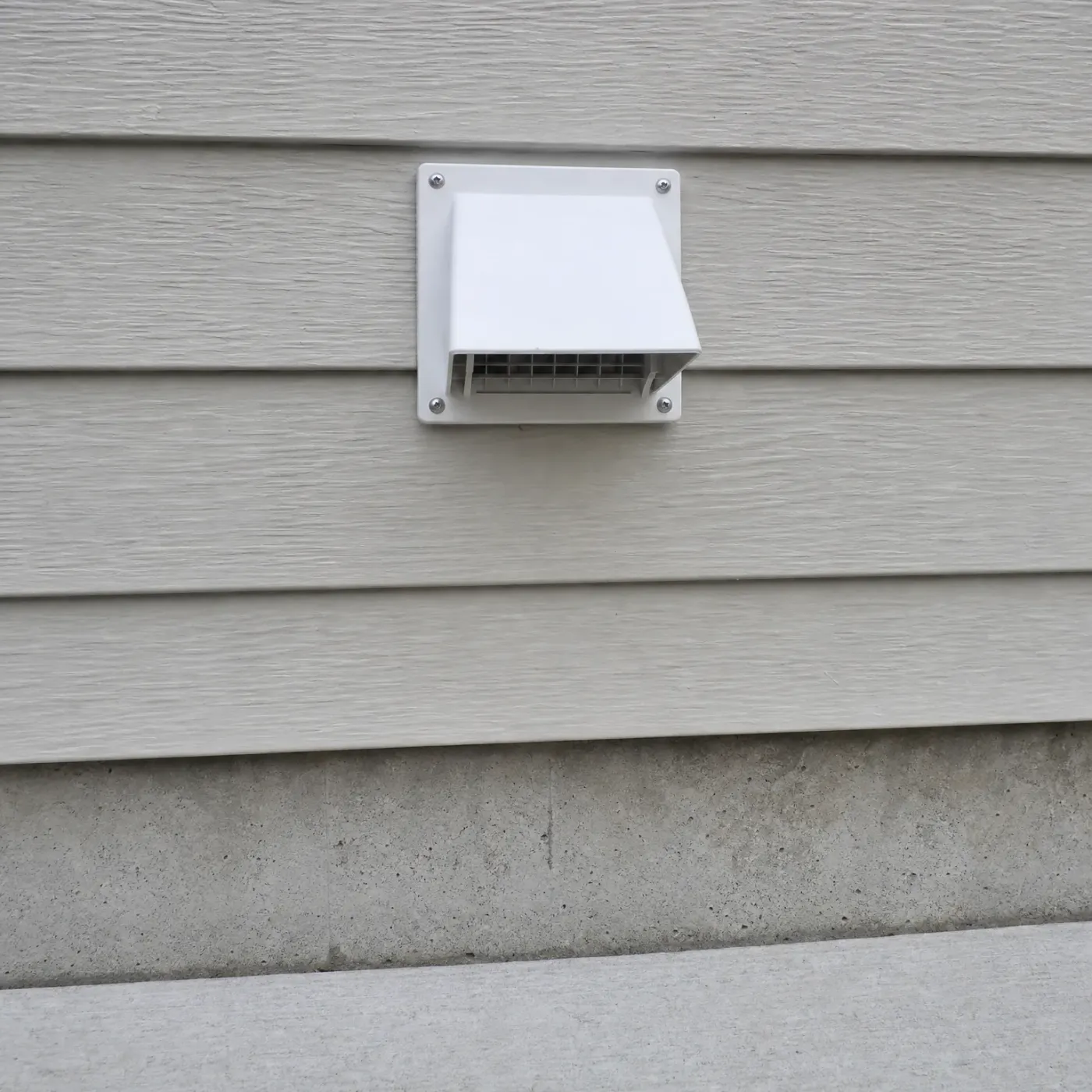
Vent clear and working
This is what a clear vent cap looks like. The louvers sit open and the hood is clean, so air leaving the dryer has a straight path outside. A dryer venting like this usually finishes a full load in one cycle.
A dryer that runs two or three cycles to get clothes dry almost always has a clogged vent. Lint builds up inside the vent pipe over time, and once it narrows the path enough, the hot moist air can't get out of the house fast enough. The dryer senses the load is still damp and just keeps heating, cycle after cycle. In DeKalb County, summers run long and humid, which means the air going into that dryer is already carrying more moisture, so a vent that's partly blocked shows the problem sooner here than it would somewhere drier. A full vent also makes the dryer run hotter than it should, which wears on the heating element and the drum bearings over time. If your dryer has been taking noticeably longer over the past few months, or the outside feels hot to the touch while it's running, that's the vent telling you it needs to be cleared.




2.63 people per household on average
The average DeKalb County home holds 2.63 people, which means more loads through the same vent path every week. A partly clogged vent gets found out faster in a busy house.
Half the homes here were built by 1984
Half the homes in DeKalb County were built in 1984 or earlier, per the Census. An older vent run has had decades to collect lint, and some were set up less direct than homes built since.
Power here costs 15.79 cents per kilowatt-hour
Power here runs 15.79 cents per kilowatt-hour. A dryer running two or three cycles to finish one load is pulling that rate two or three times over for the same batch of clothes.
ACS 2020-2024 · EIA-861 2025

It's almost nine on a Tuesday and you're still in the laundry room. This is the third time you've opened the dryer tonight, and the towels on top are still damp at the fold, heavy in your hands. The room feels warmer than it should, close with the smell of hot cotton. Outside the DeKalb County air is thick enough on its own without the dryer adding to it. You run your hand along the vent hose where it meets the wall and it's warm too, warmer than the lint trap side ever gets. You set the dryer for another forty minutes, head back to the kitchen, and the pile on top keeps waiting.


With close to three people in a typical DeKalb County house, that vent is clearing a load most days of the week, sometimes more than one. A vent that's even partly clogged has less room to catch up between loads, so the slow drying shows up sooner.
ACS 2020-2024


Lint collects inside the vent pipe with every load dried.
The buildup narrows the path hot air needs to escape.
The dryer senses the moisture staying trapped inside the drum.
It keeps running past one cycle trying to finish the job.
This is what a clear vent cap looks like. The louvers sit open and the hood is clean, so air leaving the dryer has a straight path outside. A dryer venting like this usually finishes a full load in one cycle.
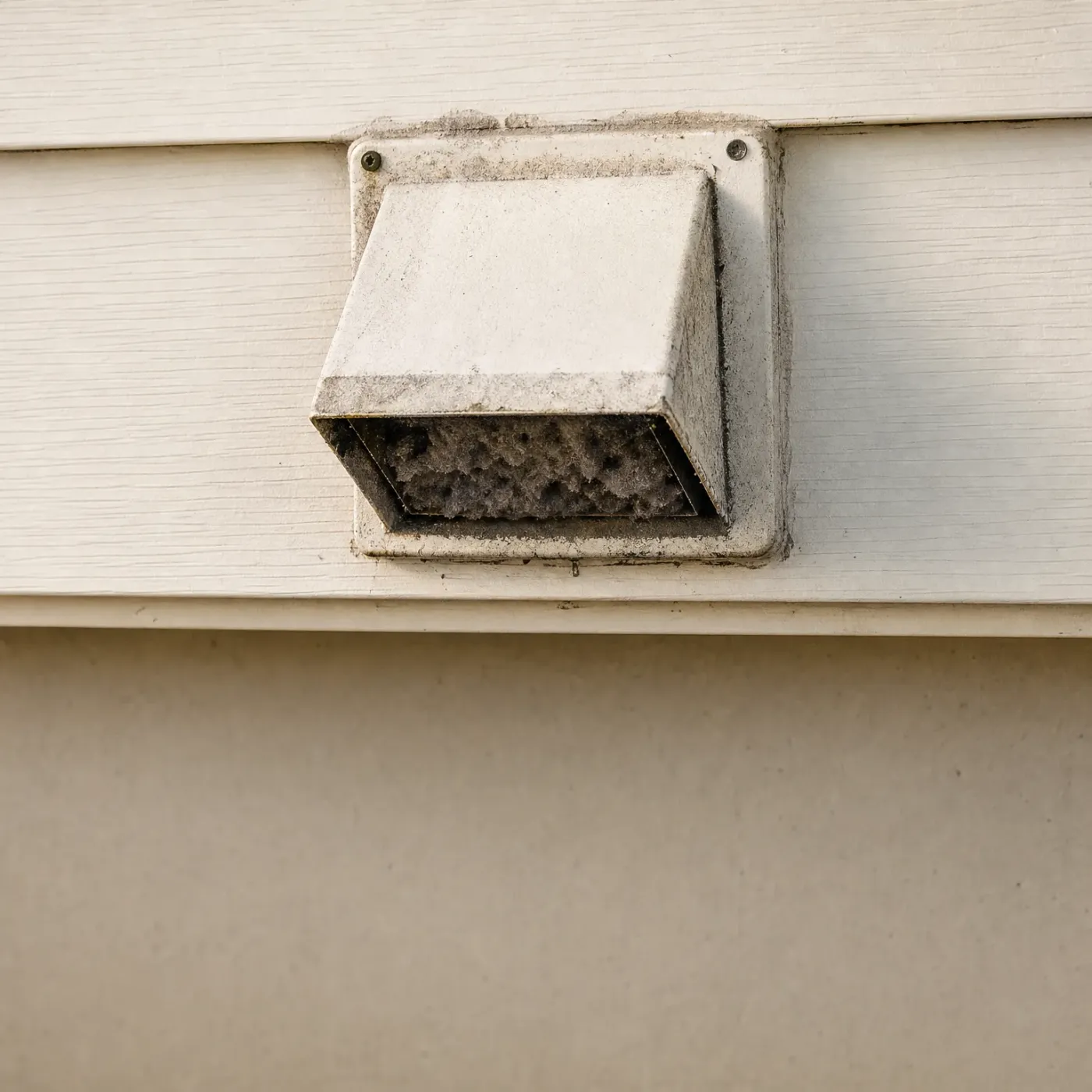
Lint has built up across the whole opening here, and the siding around it shows the dust that's been blowing back instead of clearing the house. Air can barely push through, which is why the dryer upstairs keeps running long after the clothes should be dry.


A clogged vent doesn't clear itself. Every load that runs long is lint collecting a little further down the pipe, and the dryer working harder against it. Left alone, that buildup only goes one direction. Clearing it means getting inside the full run of pipe, from the back of the dryer to the hood outside, not just pulling lint from the trap. That's a job for someone who opens up vents like this all season in DeKalb County and knows where lint tends to pack tight in a run like yours, whether it's a straight shot to an outside wall or a longer path through the attic. Getting matched means one local contractor takes your request, not a handful of companies competing for the callback. You'll hear from someone who actually does this work, about a vent that's been running two or three cycles a load for long enough that tonight's the night to stop standing in the laundry room waiting on it.
A dryer that needs two or three cycles to finish a load is telling you something specific. It isn't wearing out. It's pushing hot, wet air against a pipe that's gotten too narrow to let it through, and lint did that one load at a time. That's the whole answer. The fix isn't a new dryer or a new part inside it. It's opening up the vent run so air has a clear path outside again.
Finding where the lint packed in tightest takes knowing the vent runs common to houses in this area, and that's the kind of thing that shows up fastest to someone who clears these lines every week in DeKalb County. A contractor who works this equipment locally has seen where the buildup sits in runs like yours, long before they get to your laundry room.
When you put in a request here, it goes to one licensed contractor local to Stonecrest, not a handful of companies competing for the job. You're not fielding five calls from five directions trying to figure out who to trust with it. You get matched with someone who takes on this kind of work regularly and reaches out to you directly.
None of that changes on its own. The vent stays narrowed until someone gets into the full run of pipe and clears it out, and until that happens, the dryer keeps doing the only thing it can: running longer, trying to finish what the vent won't let it finish in one pass.

Find a dryer vent cleaning pro in DeKalb County