Ductwork that's sealed tight
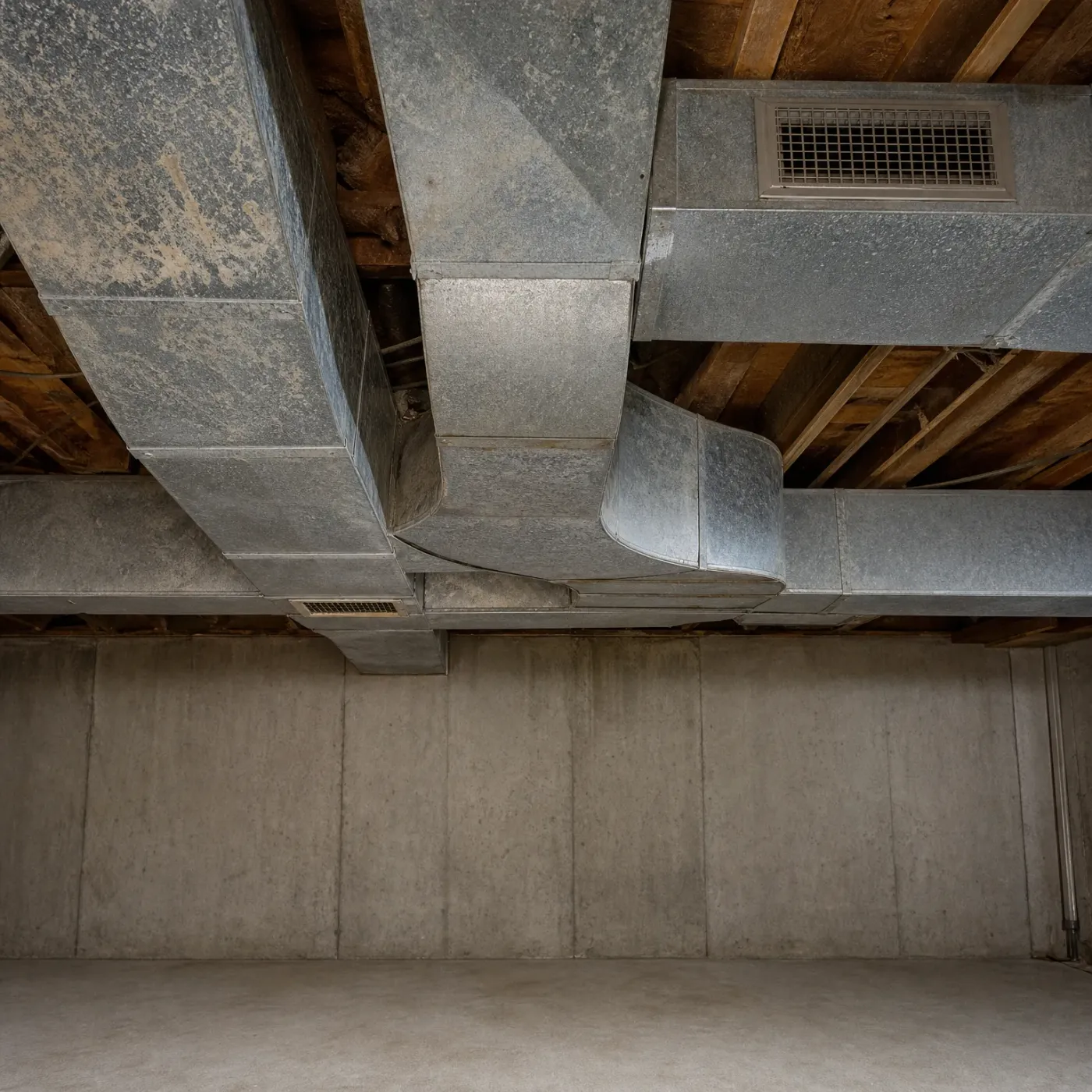
This is what a duct system looks like when the joints are holding. The metal trunk lines and flex runs stay intact between the joists, carrying air straight to your rooms instead of into the basement or crawlspace.
Leaky ducts show up as rooms that never feel right. One bedroom stays warm in January while the rest of the house is fine. Your attic or crawlspace feels like an oven because that's where the leaking duct runs. Your power bill climbs even though you haven't changed how you use the system. You hear air moving somewhere above the ceiling when the furnace or AC kicks on. Dust builds up faster than it should, because leaking ducts pull in attic or crawlspace air and spread it through the house. In Fulton County, where the AC runs for most of the year and winters still get cold enough to matter, a duct leak forces the system to work longer to make up for air that never reaches the room it was meant for. That extra runtime is what shows up on the bill. None of this means the whole system is bad. It usually means the ducts themselves need a look, and that's a different repair than fixing the furnace or the AC.
Half the homes here were built by 1993
Half the homes in Fulton County were built in 1993 or earlier, so half the duct systems around you have had decades for joints and seams to work loose.
Heat runs November through April
Heat runs November through April here, six months of warm air pushing through every seam in the duct run, leaking a little more each winter.
Cooling runs May through September
Cooling runs May through September, five months of your AC forcing conditioned air through the same ducts, which is plenty of time for a small leak to cost you.
ACS 2020-2024 · NOAA nClimDiv 1991-2020
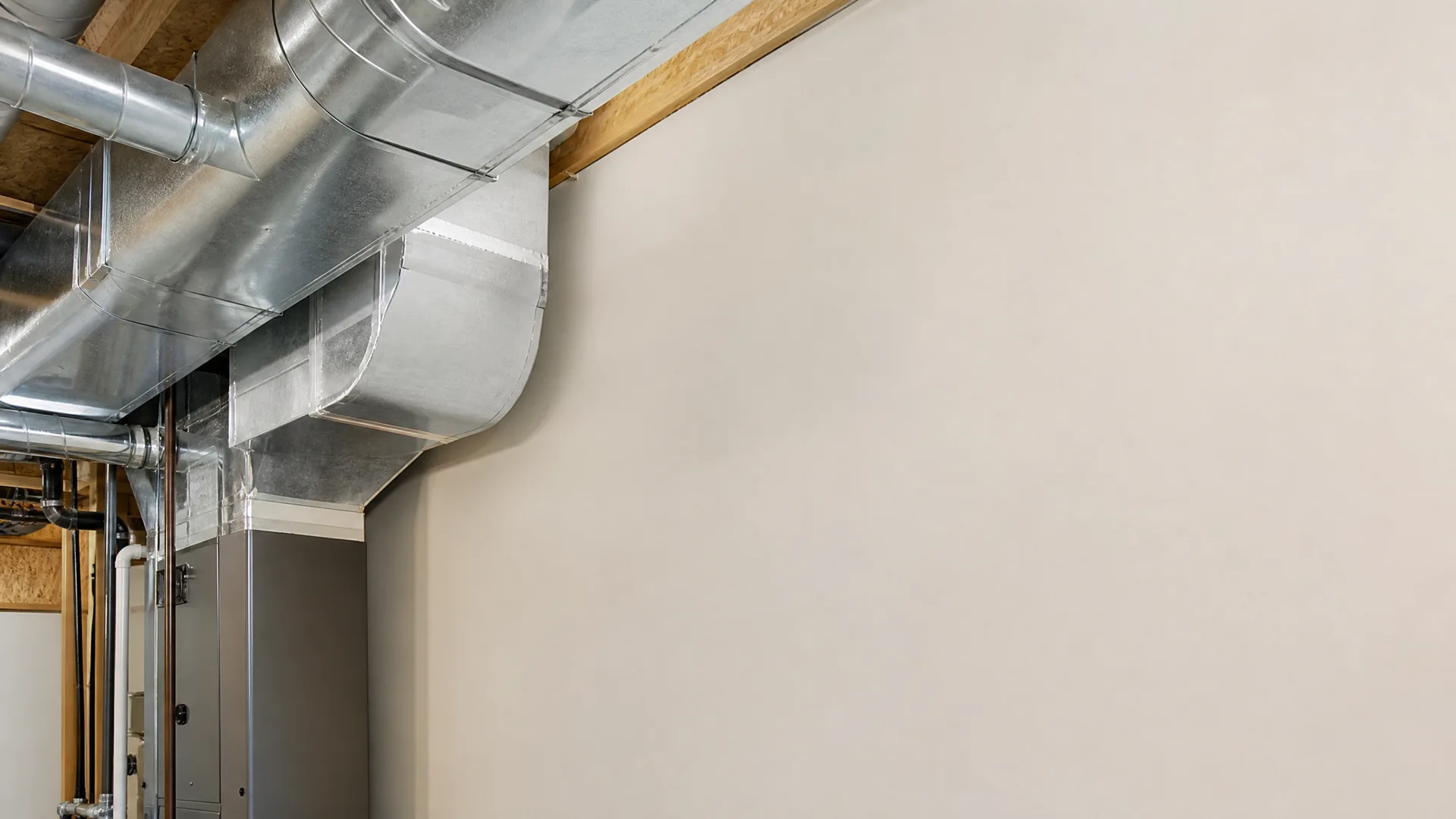
If you notice one room running warm or your bill creeping up and you check the attic or have a contractor look at the ducts, a leak at a few joints is a smaller job than waiting. Sealing a handful of seams costs less than sealing a whole run that's come apart. The homeowner who checks when something feels off usually ends up with a quick fix instead of a system that's been wasting air for years.
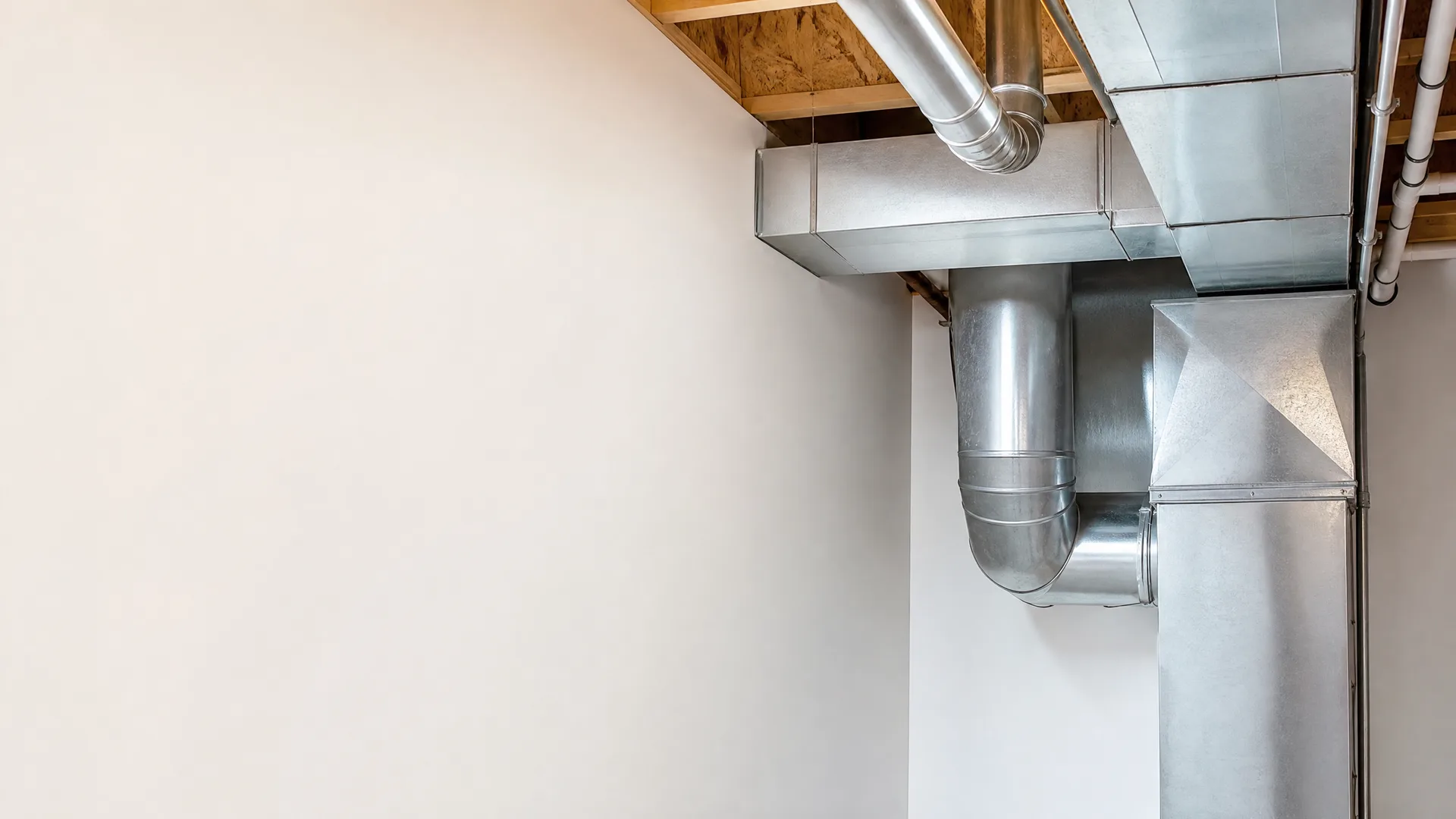
If you let the warm room and the rising bill go on because the house still feels mostly fine, the leak doesn't close itself. Every month of heat pushed through a split seam is air paid for and never used. By the time it's obvious enough to act on, more of the run may need attention, not just the spot where it started. What would have been a small repair turns into more duct to seal.
You've probably felt one room that just won't cool down in July no matter what the thermostat says, or a hallway that stays cold in January while the den is fine. You might have noticed a hissing sound near a duct joint in the crawlspace, or a thin layer of dust around a vent that wasn't there before. Your power bill has gone up and your system seems to run longer to do the same job it used to do faster. If the attic or crawlspace where your ducts run feels hotter or colder than it should, that's air escaping before it ever reaches a room. Left alone, the system keeps working harder to make up for air it's losing, and that strain doesn't go away on its own.
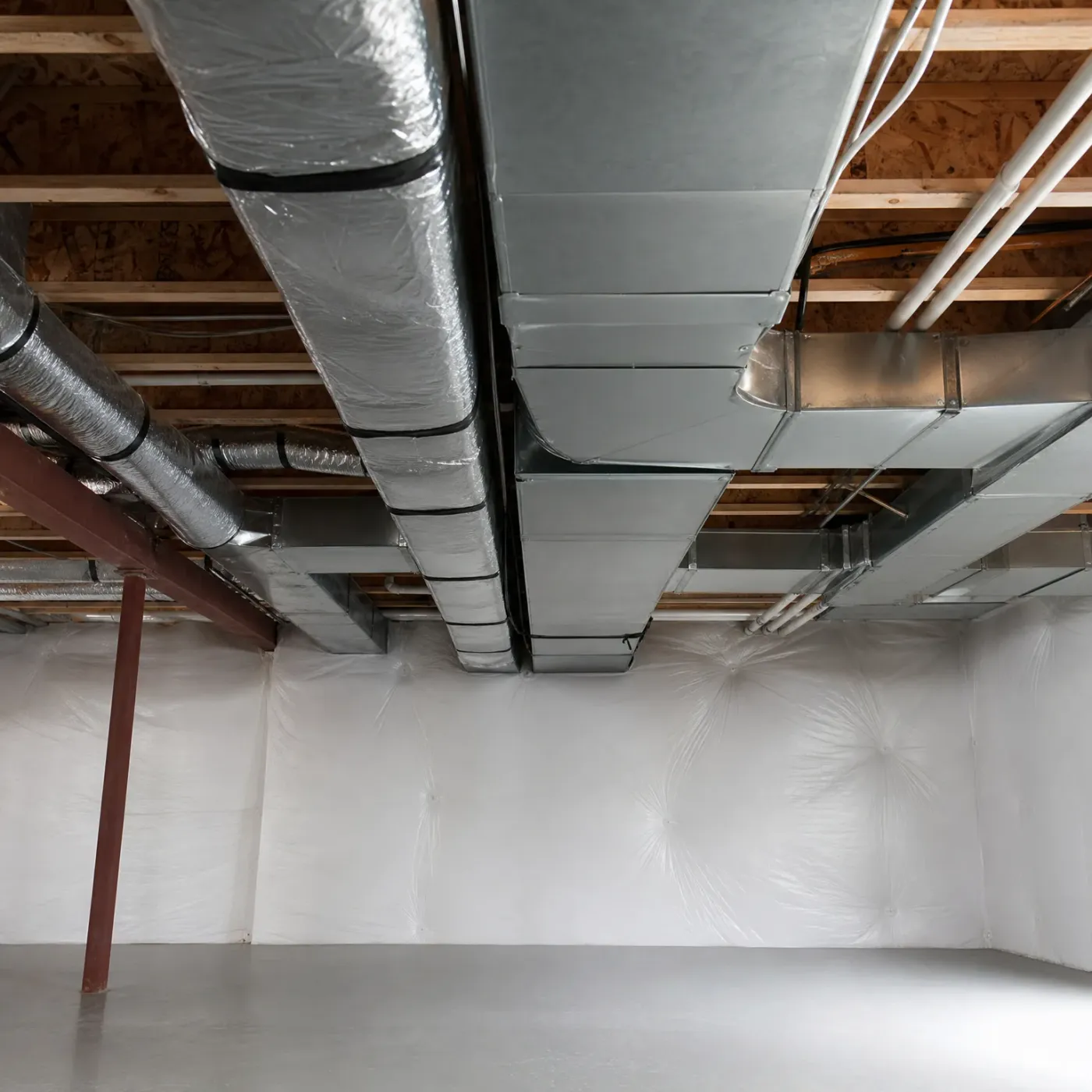
This is what a duct system looks like when the joints are holding. The metal trunk lines and flex runs stay intact between the joists, carrying air straight to your rooms instead of into the basement or crawlspace.
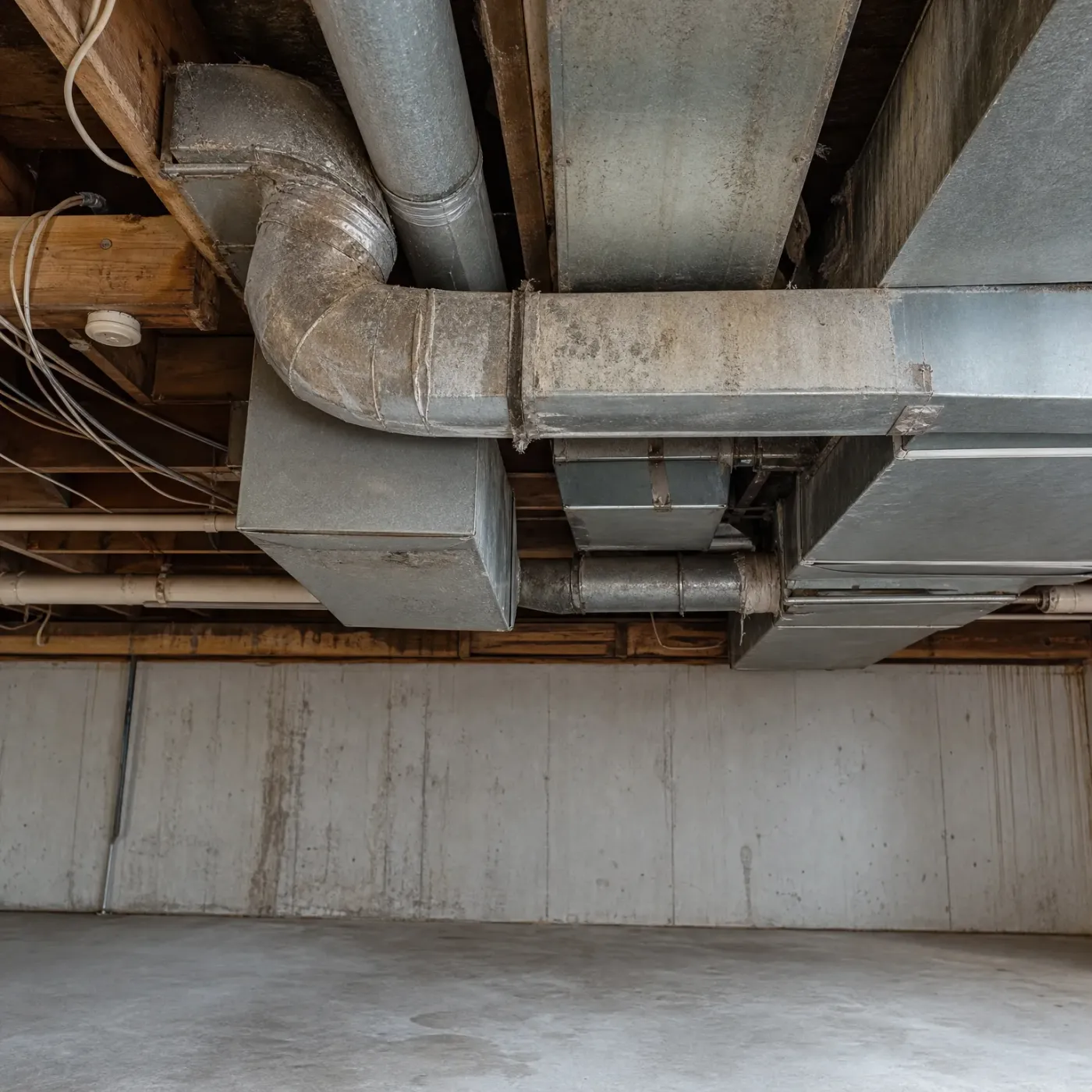
Here the trunk line has gaps at the joints, and the flex connector is loose where it meets the metal. Air is escaping into the floor structure instead of reaching the room it was sent to heat or cool.

It's a Saturday afternoon in April, warm enough that the system has been running a few days straight. You're vacuuming the living room and stop under the ceiling vent. The grille is gray with dust, and so is the end table beneath it, and the top of the picture frame next to it. You wipe the table off, and by evening there's a thin film again. The vent across the room, the one in the kitchen, doesn't do this. Just this one, pulling dust out of the attic every time the blower kicks on. You stand there a second, rag in hand, wondering what else that duct is pulling through before it reaches the room.
Skip searching for someone who cleans ducts in Fulton County.
You're not committing to anything by asking.
A duct joint that's come loose doesn't announce itself. It just pushes conditioned air into the attic instead of your living room, quietly, for months or years before anyone notices the bill or the warm bedroom.
By the time you notice the signs, the leak has usually been there long enough to cost you. Finding it early just means you stop paying for air you never got to use.
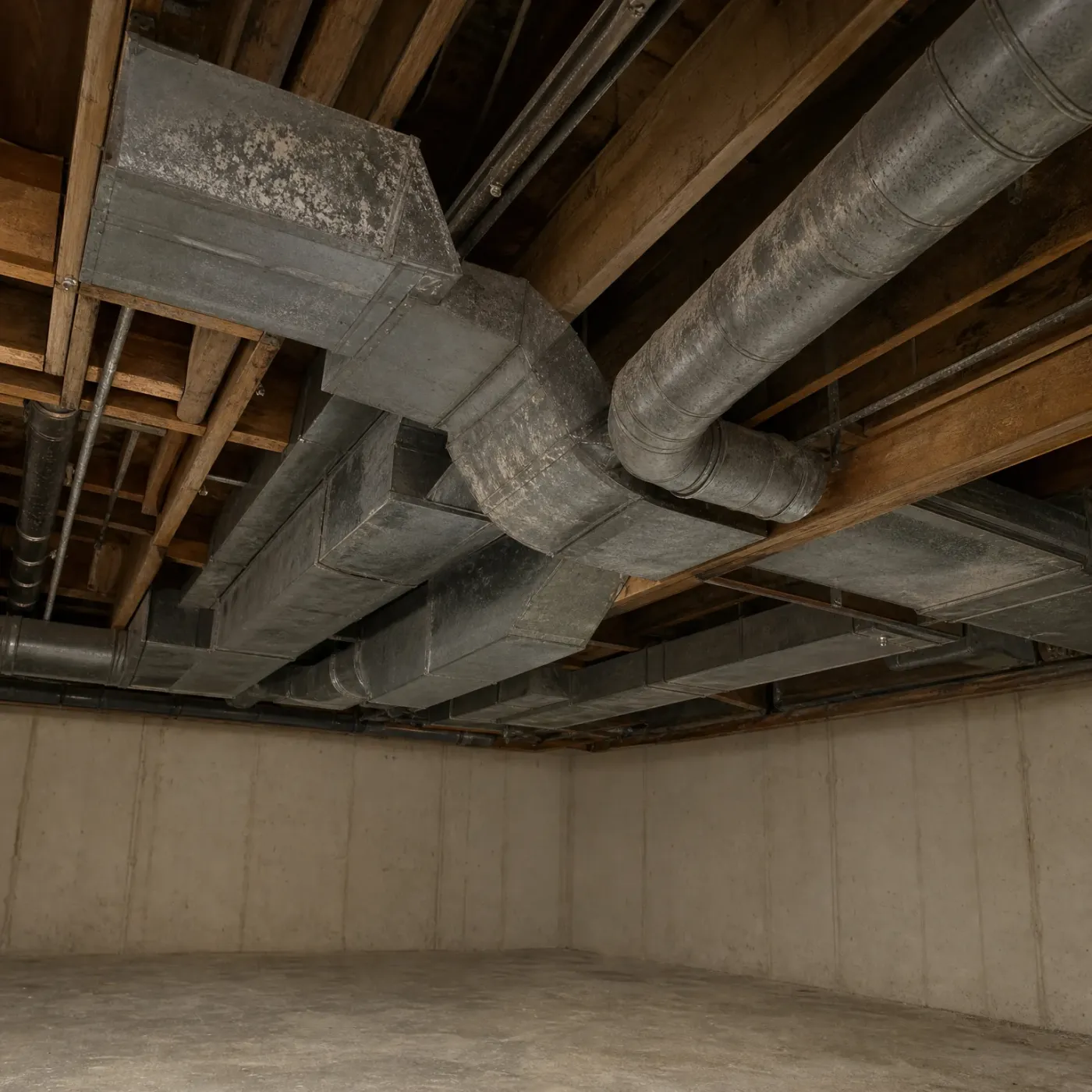
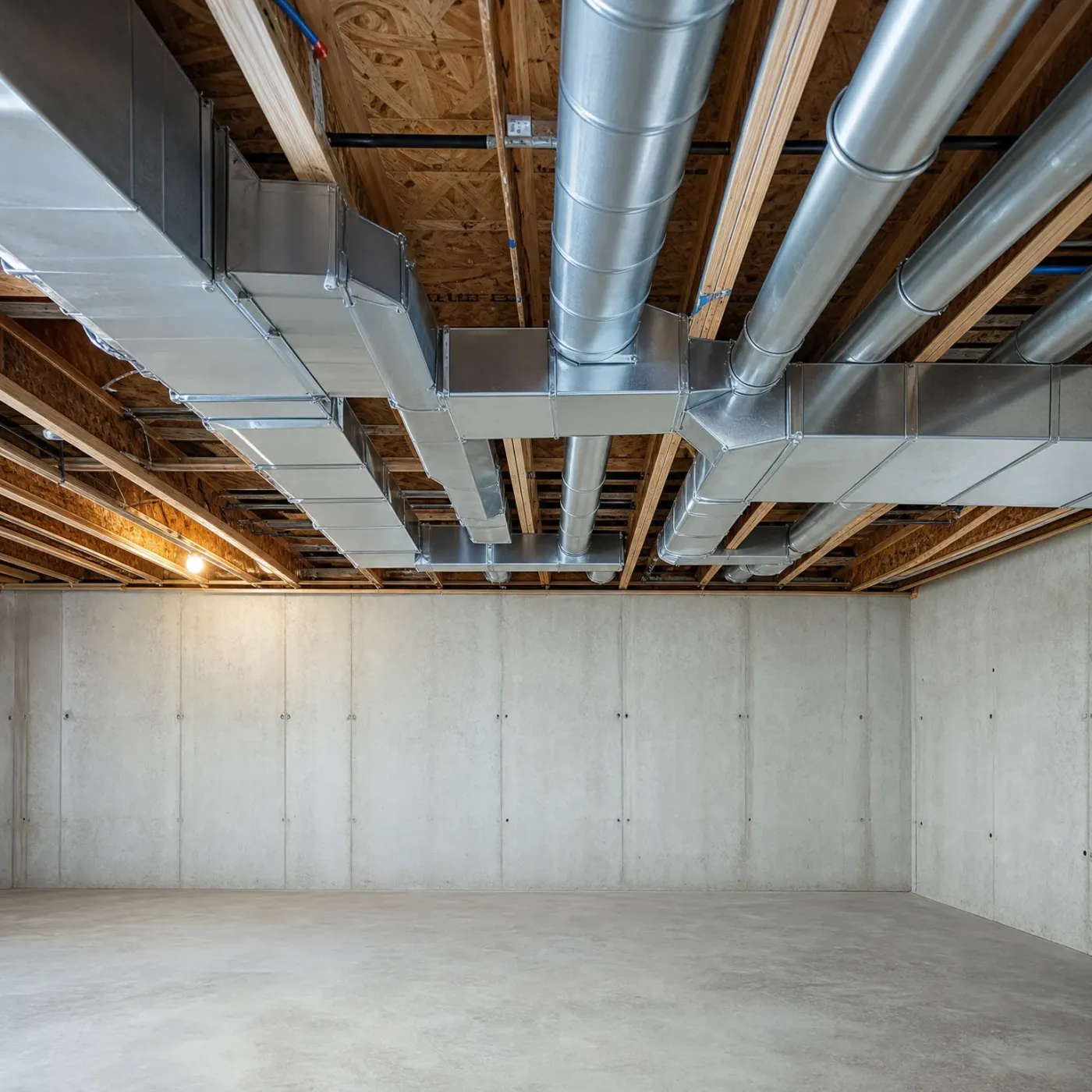
Your system moves air through one main trunk line, then splits it into branch ducts that feed each room. Where those pieces join is where trouble starts, not out in the middle of a straight run. A branch connection pulls apart, or a joint where two trunk sections meet works loose, and that's where the air goes. Flex duct has its own way of failing. The inner liner can pull away from the outer sleeve and choke down airflow without ever leaving a hole you'd see. The return side matters just as much as supply. A leak there doesn't lose conditioned air, it pulls in whatever is sitting in your attic or crawlspace, hot or musty, and feeds it straight into the system. Whatever sealed those joints originally matters too. Mastic and metal tape are built to last. Cloth duct tape is not, and it tends to let go within a few years regardless of how carefully it was put on. Before a contractor opens anything up, a static pressure test shows where the system is losing air, because pressure drops right at the point where it's escaping.




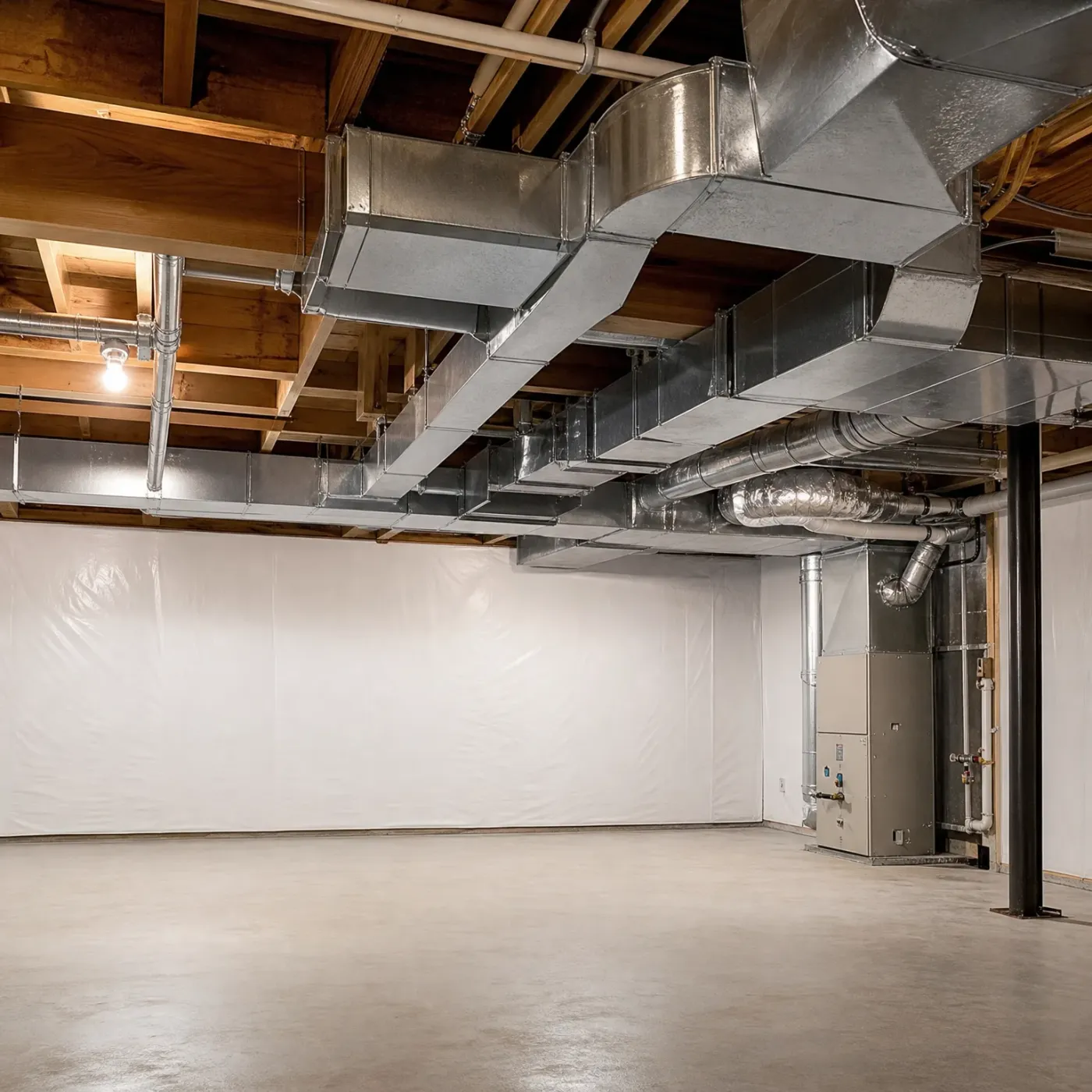
This basement duct run is doing its job. The trunk line and branches stay tight between the joists, turning corners without gaps at the seams. Air put out by the furnace goes where it's supposed to go, into the rooms above, not out into the basement air around it.
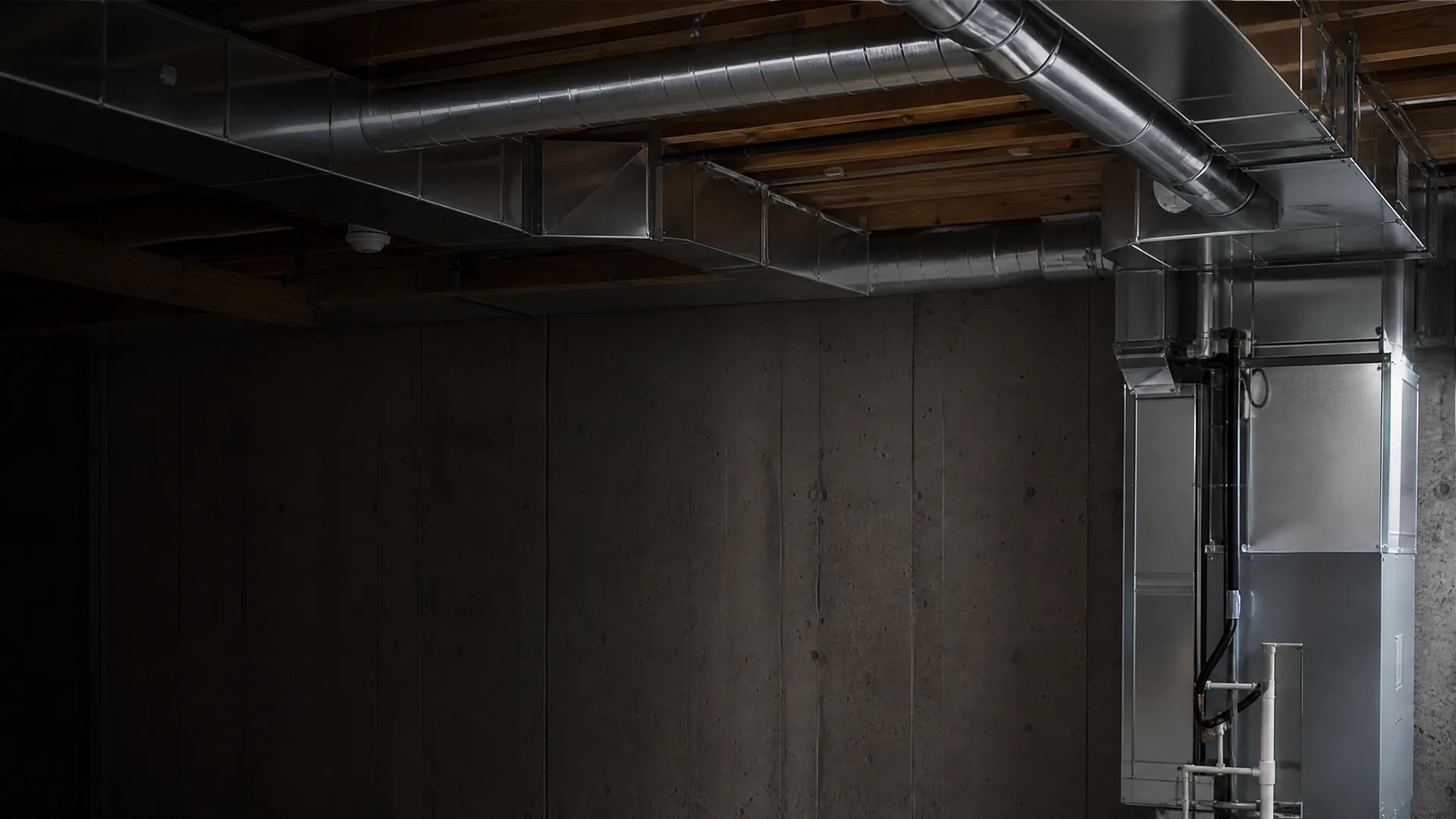
Same kind of run, same kind of basement, but watch the joints where the duct branches and turns. Those connections are where galvanized duct separates first, not along the flat metal sides. A gap at one of these seams sends conditioned air into the basement instead of through the register upstairs.
At under 15 cents a kilowatt-hour, your power bill isn't padded with a high rate to begin with. So when a leaky duct pushes conditioned air into the attic instead of your rooms, the extra cost on your bill is coming straight from wasted output, not from what you already pay to run the system.
EIA-861 2025
Nothing stops working if you wait. The furnace still runs, the AC still cools, and the house still gets conditioned air, just less of it than you're paying for. You can go through another summer with the guest room running warm and the attic hot to the touch. Some homeowners do exactly that for years, especially if the warm room is one nobody sleeps in. The tradeoff is the bill keeps climbing at the same rate it has been, and the leak itself doesn't shrink on its own. A joint that's worked loose doesn't tighten back up. It stays open at whatever size it opened to, pushing out the same share of your air every month until something is done about it.
Checking takes a lot less than people expect once someone else is doing the legwork. You're not calling around Fulton County asking which contractors do duct work, not sitting on hold, not explaining the warm bedroom and the hot attic three separate times to three separate companies. You send one form and the search part of this is off your plate. A contractor looks at the actual run, finds the joint or the seam that's open, and tells you what it would take to close it. That's one visit and one answer, instead of weeks of wondering whether the warm room is worth the trouble or putting it off until next summer's bill makes the decision for you.



A room that won't hold its temperature, a bill that keeps climbing, an attic that's too hot to stand in for long. Any one of those points at the same thing: air leaving the ducts before it reaches where you live. You don't need to find every loose joint yourself. A contractor who works on duct systems can find the leak and tell you what it'll take to close it.
Right now that means picking someone, calling around to see who's available, explaining the warm bedroom and the hissing vent over again to each one, then sitting with a few quotes trying to tell them apart. Send the form on this page and that part is handled. You'll hear from a contractor who already knows what you're dealing with, and the house gets back to doing what you're paying it to do.

Answer a few questions instead of calling shop after shop.
