Mini Split Installation in Cartersville, GA
A new system here will heat from October through April and cool from May through September every year. Tell us about the house, and a licensed contractor who covers Bartow County will get in touch.
Tell us about the job
It takes about a minute.
What a mini-split has to handle here in Cartersville
Winter nights here average 33°F from December through February. Summer afternoons run 88°F. A mini-split installed in Bartow County works both ends of that swing, because it carries the heat from October through April and the cooling from May through September. That is all 12 months a year with no season off.
Any mini-split installed now has to clear the federal minimum for a split-system heat pump. That means 14.3 SEER2 for cooling and 7.5 HSPF2 for heating. That is the floor, not a selling point. This area also sees real storm activity, with 90 damaging wind events and 5 winter storms recorded over the past ten years, and 31% of Georgia households went at least 24 hours without power in 2024. A mini-split has no backup heat built in. When the power goes out, it stops until the power comes back.
- 7 months
- October through April, your system heats
- 5 months
- May through September, it cools
- 33°F
- the average winter night it heats against
- 88°F
- the average summer afternoon it cools against
NOAA nClimDiv, 1991–2020 normals
Georgia requires HVAC contractors to hold a state license.
Georgia's Construction Industry Licensing Board tests contractors before they can hold an HVAC license, and it keeps a record of who holds one. That license belongs to the contractor, not to any single job, so the same license covers a mini-split install today and a furnace repair next year.
For this job, the license is what stands behind the person doing the work, but most cities and counties in Georgia also require a permit for a mini-split installation, with an inspection once it's done. That inspection is a separate check on the work itself, apart from whatever the contractor's license already covers.
Source: Georgia Secretary of State
- Is a mini split worth it?
- For the right space, yes. It heats and cools without ducts, so there is no energy lost through duct leaks the way there can be with central systems. It also lets you set different temperatures in different rooms, which matters if parts of the house sit empty during the day. Winter nights here average 33°F from December through February, so if you are counting on it to carry the heat all winter, look for a unit rated for cold-climate performance.
- How many rooms can a mini split cover?
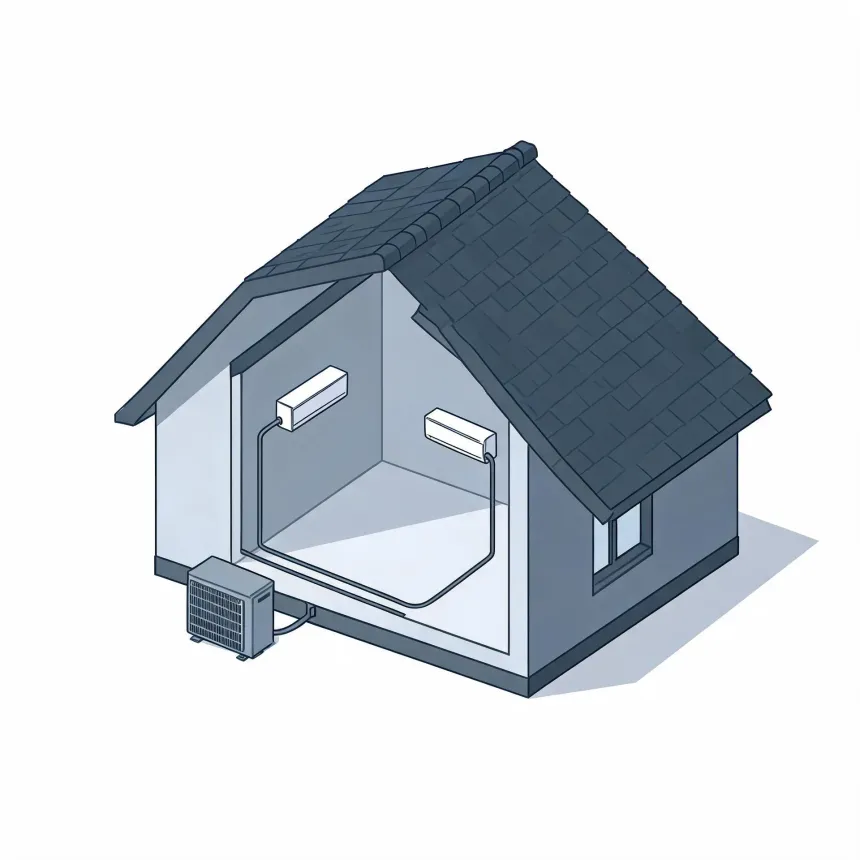
- A single outdoor unit can run one indoor head or several. Each indoor head heats and cools one room or one open area, so the number of rooms you can cover depends on how many heads the outdoor unit supports and how its capacity gets split between them. A contractor can look at the house and size the system to the rooms you want covered.
- Can a mini split heat a whole house?
- It can, with the right layout. A multi-zone system with a head in each main room heats the whole house the same way a furnace does, just without ducts. Homes here need heat from October through April, seven months a year, with winter nights averaging 33°F, so whole-house coverage means every room needs enough capacity for those cold nights, not just the mild ones. A contractor can size the zones to the house.