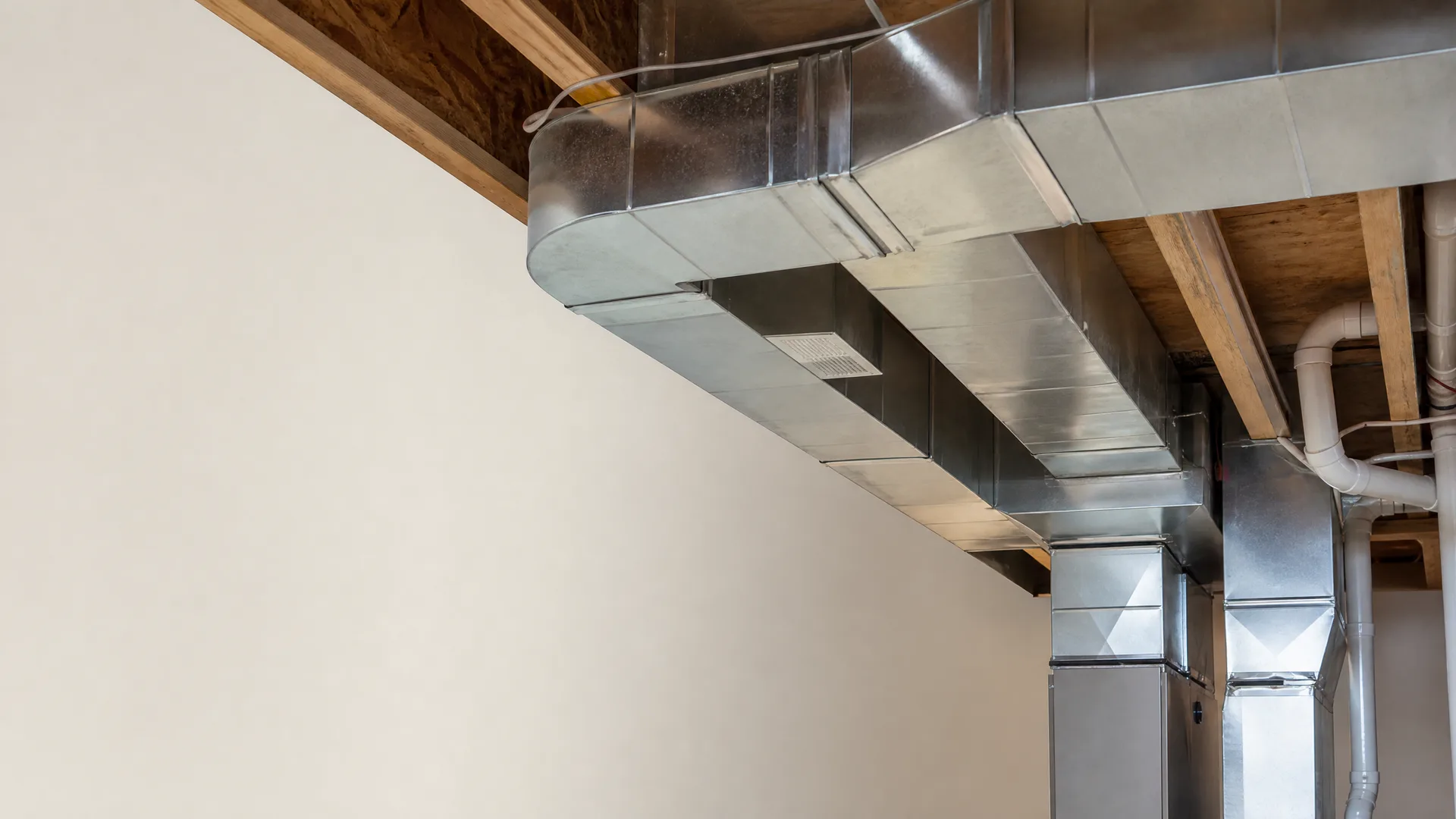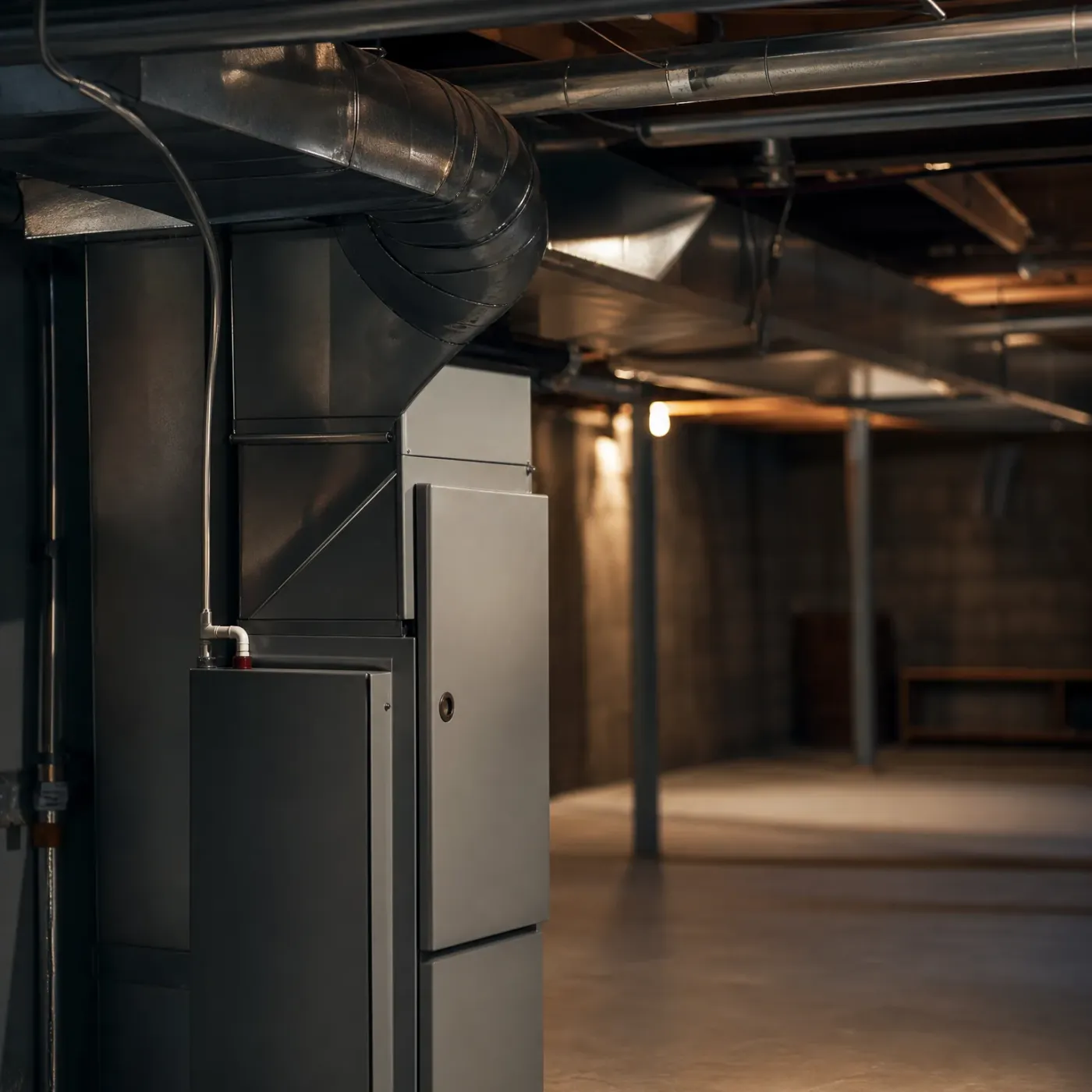



A basement interior with a gray furnace or air handler unit connected to large sheet-metal ductwork running along the exposed joist ceiling, with support posts and a concrete block wall in the dim background.

Get matched with a duct system pro in DeKalb County

Signs of leaky ductwork in Stonecrest, GA

Leaky ducts waste the air your furnace and AC just paid to heat or cool, and they show up as rooms that never feel right and bills that creep up for no clear reason. This page walks through what to look for in your attic, crawl space or closet runs, and where a contractor fits in once you've spotted something.

Find a pro near me

The signs are usually a room or two that never matches the thermostat, a utility bill that climbs even though nothing else changed, and ductwork you can see sagging, crushed, or pulled apart at a joint. In Stonecrest, a lot of homes run ducts through the attic, and summers here are long and humid enough that a leaking supply run will dump cooled air into that hot attic space all day. You might also notice weak airflow at the vents farthest from the furnace, dust settling faster than it should, or a musty smell when the system kicks on, which can mean the ducts are pulling in attic or crawl space air instead of the air your system just conditioned. Flexible duct that has come loose from a collar, or metal duct with a gap at the seam, is often the cause. None of this fixes itself, and the longer it runs, the more your furnace and AC work to make up for air that never reaches the room.

Unfinished basement with concrete floor and walls, exposed wood joists, steel support posts, and large galvanized sheet-metal ductwork running to a furnace or air handler against the far wall.
Sealed runs hold their shape, joints stay banded tight, and air moves through the metal to the vents instead of leaking into the joist bays.
Galvanized sheet-metal ductwork and round pipes run along a wooden floor joist ceiling above a bare concrete wall and floor.
A gap at a joint or a crushed run here lets conditioned air spill into the basement instead of reaching the rooms it was sent to.

Why does duct age and runtime matter so much here?

  • Half the homes here were built by 1984

    Half the homes in DeKalb County were built by 1984, so a lot of duct runs are old enough that joints and tape have had decades to give way.

  • Heat runs November through April

    Your furnace runs about six months a year here, November through April, which is a long stretch for air to leak out through a bad seam before anyone notices.

  • Cooling runs May through September

    Cooling runs May through September, another five months where a leaky return can pull hot attic air into the system instead of the air you just paid to cool.

ACS 2020-2024 · NOAA nClimDiv 1991-2020

Unfinished basement with bare concrete floor and walls, exposed wood joists, metal ductwork, a furnace unit, steel support posts, and a small window.

Ducts running tight through the joists

Here the metal runs sit square under the floor joists, bands snug at every joint. Air moves through the duct to the vents instead of finding a gap. The furnace and water heater sit below, doing their job without fighting a leak upstream.


Empty basement with bare concrete walls and floor beneath an exposed wood-joist ceiling carrying galvanized sheet-metal ductwork, round ducts and pipes.

A run losing its air before it arrives

Here the spiral duct and the sheet-metal runs sag between the joists, with joints that have pulled apart over the years. Air you paid to heat or cool is spilling into the basement instead of reaching the vents, and the rooms on the other end feel it.

Why does one room feel wrong no matter what you set the thermostat to

Walk your house room to room with your hand near each vent. A bedroom or back room that runs warmer in summer and colder in winter than the rest of the house usually means the duct feeding it is leaking along the way, so less air gets there than your furnace or AC sent out. Check the attic or crawl space if you can get to it: look for runs that sag between joists, flex duct with a split in the jacket, or a metal joint where the band has slipped and you can see daylight or feel air moving across your hand. Dust streaking near a floor register or a musty smell from a crawl space vent points the same direction. Left alone, the gap only opens further, and the furnace and AC keep running longer to make up for air that never reaches the room.

An older man with gray hair and a beard, wearing a dark jacket dusted with snow, stands smiling in a dimly lit hallway with lamps and a living room visible behind him.
A gray-haired, bearded man in a dark snow-dusted coat stands smiling in a dimly lit entry hall with a staircase, a lit table lamp, a framed picture, and a living room visible through a doorway.
An older man with white hair and a beard, wearing a dark snow-dusted coat and scarf, stands in a warmly lit interior hallway with a framed landscape picture, a table lamp and a potted plant behind him, and a snowy view through a window at left.
A gray-haired, bearded man in a dark coat dusted with snow stands smiling in a dimly lit room with a lamp, mirror, framed art, and a sofa in the background.

Cleaning vs. Sealing the Leak

Duct cleaning

  • A cleaning clears dust and debris from the inside of the metal so air moves through the way it was designed to.
  • It does not reseal a joint that has pulled apart or reattach a run that has sagged off its hangers.
  • If a vent blows weak after cleaning, the cause is usually a leak or a crushed section, not buildup inside the duct.
  • Cleaning will not stop a utility bill from climbing if the real issue is conditioned air spilling into the attic or crawl space.
  • A contractor doing a cleaning can tell you if they saw open joints or damaged runs while they were in there.
  • Worth doing on its own schedule, but it solves a different problem than a leak does.

Duct sealing or repair

  • This addresses the actual gap, crushed run, or separated joint that is letting air escape before it reaches the room.
  • A room that never matches the thermostat usually points to a feed that is leaking, not one that is dirty.
  • Sealing or reattaching a run keeps the air your furnace or AC already conditioned moving to the vent instead of into the joist bays.
  • This is the fix that stops a bill from creeping up when nothing else in the house changed.
  • A contractor can band a joint, support a sagging run, or patch a gap once it is found.
  • Skipping this and cleaning instead leaves the leak in place even if the ductwork looks cleaner inside.
Basement ceiling with galvanized sheet-metal ductwork, wooden joists and subfloor, black and white pipes, above a concrete wall and floor.
Before you get your ductwork cleaning
Unfinished basement with bare concrete walls and floor, exposed wood joists, and galvanized sheet-metal HVAC ductwork and pipes running across the ceiling.
After you get your ductwork cleaning

Find a duct system cleaning pro in DeKalb County

You can chase this room by room for a season, closing a vent here, running a space heater there, and still land back where you started: a duct system that is leaking air into the attic or crawl space no matter what you set the thermostat to. A cleaning will clear what has built up inside the metal, but it will not tell you whether a joint has pulled apart or a run has sagged off its hangers, and that is a different look with different tools. Finding someone who does both, and knows what they are looking at in a DeKalb County attic or crawl space, usually means a string of calls, repeating the same description of the room that never feels right, and sorting through quotes that do not list the same work. Handing that off means one contractor who works on duct systems like yours gets in touch, and you go back to just living in the house.

How a technician finds the leak

  • A technician checks static pressure at the air handler first, since a leaky return can pull air from the attic instead of the living space.
  • Smoke pencils or a fog stick held at a joint will show air pulling in or pushing out while the blower runs.
  • A duct blaster test pressurizes the whole system and measures how much air the house loses per minute through gaps.
  • Flex duct that has pulled off its collar usually shows a dark ring of dust around the gap where unconditioned air has been leaking through.
  • Mastic sealant goes on by hand at every joint and seam; tape alone tends to dry out and let go within a few years.
  • A duct that runs through an unconditioned attic loses more through a given leak than the same gap on a run inside the house.

Finding a leak isn't guesswork. A technician starts at the air handler, checking static pressure, because a return pulling air from the attic will throw that number off before anything else shows up. From there, a smoke pencil or fog stick held near a joint tells the story fast. If the smoke gets pulled in or pushed out while the blower runs, that joint is open. On a bigger job, a duct blaster seals off the registers and pressurizes the whole system, then measures how much air the house is losing per minute. That number tells a technician whether this is a one-joint fix or a system that's leaking throughout.

Not every gap needs instruments to find. Flex duct that has worked loose from its collar often leaves a dark ring of dust right at the edge, built up over months or years of unconditioned air pulling through the gap. That ring is worth checking for before anything else, especially where a run crosses the attic.

Once the leaks are marked, the fix matters as much as the find. Mastic goes on by hand at every joint and seam, worked into the gap rather than just laid over it. Tape doesn't hold the same way over time, even the foil kind sold for duct work; it dries out and lets go within a few years. And where the run sits matters too. A gap in a duct crossing the attic costs more in lost conditioned air than the same size gap on a run boxed inside the house, since attic air is already working against the system.

A woman wrapped in a thick textured blanket sits on a sofa with an open book on her lap, beside a lit lamp and bookshelf, with a frost-patterned window behind her.
A smiling older woman with gray hair in a loose bun wearing a ribbed beige sweater stands in a dimly lit kitchen beside a window showing darkness outside, with a loaf of crusty bread on a wooden board in the foreground.

Power here costs 15.79 cents per kilowatt-hour

At 15.79 cents per kilowatt-hour, air leaking out of a duct run before it reaches the vent is power you paid for and never got to use. A sealed system gets that same air into the room instead of the attic, and your bill reflects it.

EIA-861 2025

Galvanized sheet metal HVAC ductwork and insulated flexible ducts running along a wooden-joist ceiling beside a plain light-colored wall.

Leaving the leak alone

The furnace and AC keep running the same cycle, pushing air through a run that is still losing part of it before the vent. The room that ran warm in July runs cold in January, because the gap is in the same spot no matter which way the system is working. Nothing about the leak fixes itself, and the joist bay or attic space it empties into stays damp or overheated depending on the month.

Galvanized sheet metal HVAC ductwork running along a wood-joist ceiling beside a plain light-colored wall, with white pipes nearby.

Getting the run sealed

A contractor can find the gap with static pressure readings or a fog stick, band the joint back down, and support a run that has sagged off its hangers. Once the metal holds air the way it did when it was installed, the vent in that back room starts matching the thermostat again. You stop finding that one register that barely moves air while the rest of the house is comfortable.

A woman in a long cream cardigan and jeans stands at an open wooden front door of a gray shingled house with stone-based porch columns, with a second person visible inside, and potted flowers and shrubs beside the entry.

What this comes down to

A sagging run, a gap at a joint, a room that never matches the thermostat, a bill that keeps climbing. Any one of those is reason enough to get your ducts looked at. In a house where the furnace runs six months and the AC covers the rest, air lost before it reaches the vent is air you paid for twice: once to heat or cool it, once in the bill that follows.

You don't have to track down who does this kind of work in Stonecrest, call around, and explain your ducts to three different people before you get a straight answer. Answer a few questions about what you're seeing and a contractor who handles duct sealing in DeKalb County will reach out to you directly, already knowing what you're dealing with.

A mug and a small round vase sit on a wooden windowsill beside sheer and heavier curtains, with blurred autumn trees seen through the rain-speckled window and a sofa with cushions and a throw in the foreground.
A single-story house with horizontal siding and large windows lit from within at dusk, beside a lawn, low path lights and a dark gravel driveway, with pine trees and a distant waterway under an orange and blue sky.

Ductwork Cleaning

A local pro for your ductwork cleaning

Duct and vent cleaningDucts or ventsDeKalb County, GA
Step 1 of 2

What ZIP code is the job in?

  • A ceramic vase holding dried flowers and a shallow stoneware bowl sit on a wooden table beside a bright window, with a paneled wall and framed picture behind.
    • Get matched with a DeKalb County pro who cleans ducts.
    • Get matched with a pro who works on ducts in DeKalb County.
  • A stoneware jug holding dried pink and green hydrangea blooms sits on a polished wooden sill beside a dark lidded box and a metal candlestick, in front of a multi-pane wood window with blurred greenery outside.
    • Send it once and finding someone is no longer on you.
    • Send the form and finding a duct cleaner is handled.
  • A white window sill holding a ceramic vase with olive branches and a shallow wooden bowl, with blurred green foliage and a neighboring roof visible through the window and a woven basket below.
    • Describe your ductwork job once, to one pro.
    • Skip searching for someone who cleans ducts in DeKalb County.
  • A green fern in a light gray ceramic pot with a matching saucer sits on a wooden table beside a glass-based lamp, next to a curtained window.
    • The pro who gets in touch is licensed in Georgia and works in DeKalb County.
    • A licensed pro who works in DeKalb County gets your request.