Heat Pump Repair in Newnan, GA
Homes here need heat from November through March and cooling from May through September. If your system quits, tell us what it's doing and a licensed contractor who covers Coweta County will get in touch.
Tell us about the job
It takes about a minute.
Your heat pump works ten months a year here
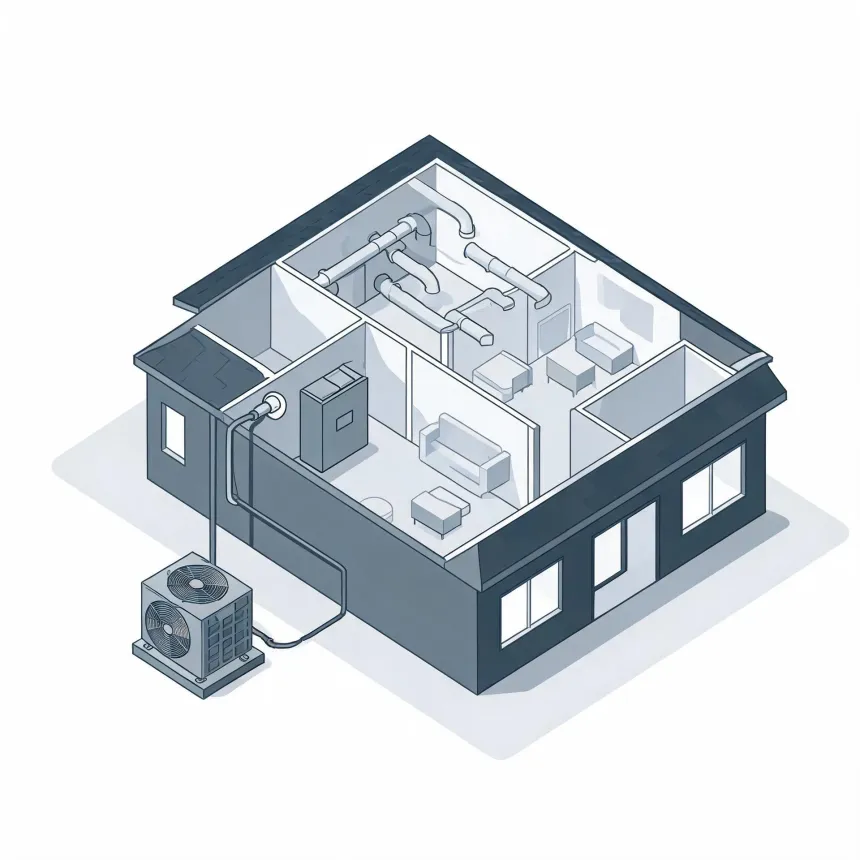
In Coweta County your heat pump heats the house from November through March, then switches over and cools it from May through September. Only two months a year it gets to sit idle. That kind of use wears on the reversing valve, the part that switches the system between heating and cooling, and on the compressor that carries the load in both seasons.
Winter nights averaging 35°F mean the outdoor unit runs a defrost cycle often, melting the frost that builds on the coil. When that cycle fails, the coil ices over and the system stops pulling heat from the air. Summer afternoons near 88°F push the compressor hard for months at a stretch. More than half of homes here heat with electricity, so when the heat pump falters in winter there is usually no backup system to catch it, and the house is left cold until someone looks at it.
- 5 months
- November through March, your system heats
- 5 months
- May through September, it cools
- 35°F
- the average winter night it heats against
- 88°F
- the average summer afternoon it cools against
NOAA nClimDiv, 1991–2020 normals
Georgia requires HVAC contractors to hold a state license.
The State Construction Industry Licensing Board tests and keeps records on the contractor, not on any single job. So the license attached to the person or company working on your heat pump in Coweta County is the same one they would carry into any other house in Georgia. It tells you the state has checked them once, not that this particular repair was inspected.
A heat pump repair usually means someone is working on the refrigerant side of the system, and that calls for something beyond the state license. Any technician who opens that side, anywhere in the country, has to hold EPA Section 608 certification. That is a federal requirement, separate from Georgia's licensing, and it exists because refrigerant work has to be handled correctly no matter which state you're in.
Source: Georgia Secretary of State
- Why is my heat pump blowing cold air?
- In heating mode, the air from the vents is meant to feel warm but noticeably cooler than a furnace, so if it feels cool to the hand that can be normal. If it's actually blowing cold, the system may have dropped into backup heat only, or the reversing valve that switches it between heating and cooling could be stuck in the wrong position. A frozen outdoor coil or low refrigerant will also cause this. A contractor can check the reversing valve and refrigerant charge to find which it is.
- Why is there ice on my heat pump?
- Some frost on the outdoor unit in winter is normal, and the system defrosts itself on a timer. Ice that builds up thick or stays through a defrost cycle means airflow across that coil is blocked, often by a dirty coil, a failed fan motor, or snow and debris packed around the unit. It can also mean the defrost control board isn't triggering the cycle. Left alone, the coil can't pull heat from the outside air and the system loses capacity, so it's worth having a contractor look at it rather than waiting for it to melt off on its own.
- Why is my heat pump running but not cooling?
- This usually means the outdoor unit is running but not moving heat out of the house, which points to low refrigerant, a failing compressor, or a blocked outdoor coil. Check that the outdoor unit isn't buried in leaves or debris, since airflow across it is what lets it reject heat on a 88°F afternoon. If the coil is clear and it's still not cooling, the compressor or refrigerant charge needs a contractor's gauges to diagnose.