
AC Maintenance in Newnan, GA
Air conditioners here run from May through September, so April is the time for a tune-up. Tell us about your system, and a licensed contractor who covers Coweta County will get in touch.
Tell us about the job
It takes about a minute.

Five months of hard running takes a toll
Your air conditioner works from May through September here, with summer afternoons averaging 88°F. That is five straight months of long run times, and the parts that keep the system cooling, the compressor, the capacitor, the fan motor, do not get much of a break in between.
Coweta County has also seen its share of rough weather, with 174 damaging wind events and 29 hail storms over the past ten years, one dropping hail nearly two inches across. A tune-up is when a contractor checks the outdoor unit for that kind of damage, along with the wear that comes from a long, hot cooling season, before it turns into a system that will not start.
- 5 months
- May through September, your air conditioner is on duty
- 88°F
- the average summer afternoon it cools against
- 29 hail events
- in ten years, and hail bends the fins on outdoor coils
- 174 wind events
- in ten years, and wind drives debris into outdoor units
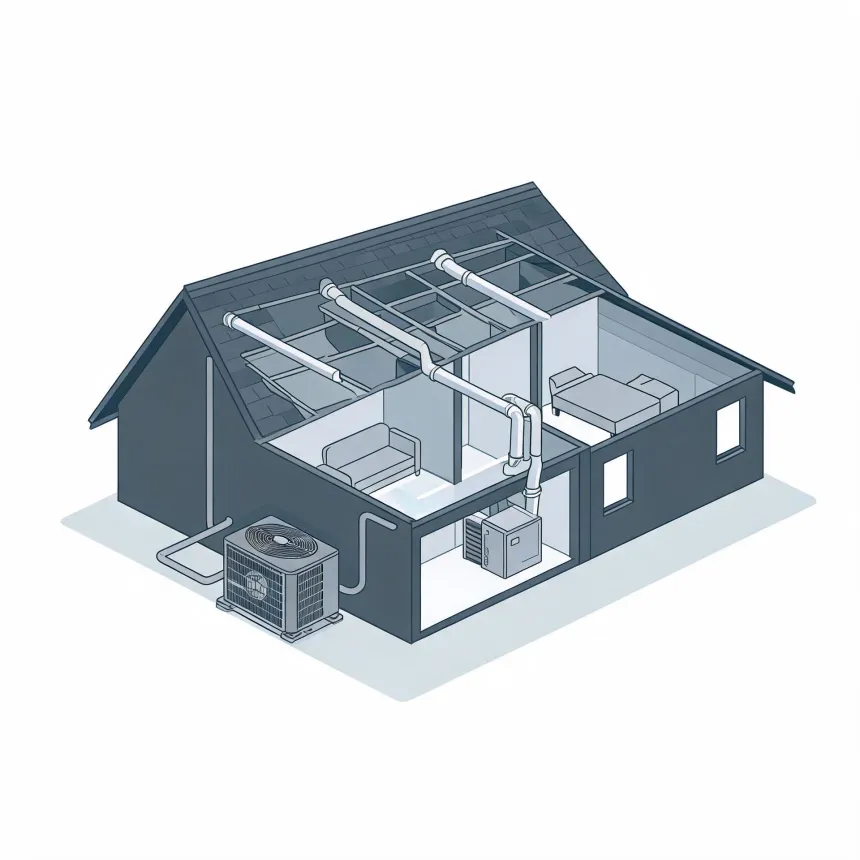
NOAA nClimDiv, 1991–2020 normals

Book your AC tune-up in April, before homes here start needing cooling in May.
- Jan
- Feb
- Mar
- Apr
- May
- Jun
- Jul
- Aug
- Sep
- Oct
- Nov
- Dec
A tune-up checks the refrigerant charge, cleans the coils, tests the capacitor and tightens the electrical connections.
Georgia requires HVAC contractors to hold a state license.
Georgia licenses HVAC contractors through the State Construction Industry Licensing Board. The board tests and records the contractor, and the license covers that contractor's standing with the state, not any single visit.
For maintenance on your air conditioner, that license is what stands behind the work. If the technician opens the refrigerant side of the system to check the charge or inspect the coil, they also need EPA Section 608 certification, a federal rule that applies everywhere in the country regardless of Georgia's license. The state license answers for who is doing the work. The federal certification answers for how the refrigerant is handled.
Source: Georgia Secretary of State
- What does AC maintenance include?
- A technician checks the refrigerant level, cleans the condenser coil outside, and tests the capacitor and contactor that start the compressor. They also inspect the electrical connections and confirm the system is drawing the right amount of current. Inside, they check the evaporator coil and drain line, since a clogged drain can back up and cause water damage. They will also change or check the filter, since airflow across the coil affects how well the system cools.
- How often does an air conditioner need maintenance?
- Once a year, before summer starts. Homes here need cooling from May through September, so having the system checked in spring gives a technician time to catch a weak capacitor or a low refrigerant charge before the heat sets in. Filters need attention more often than that, since airflow through the system affects how well it cools.
- Is AC maintenance worth it?
- Yes, because most of the failures that leave a system down in the middle of summer are things a technician can catch ahead of time. A capacitor that is starting to weaken, a coil caked with dirt, refrigerant that has dropped below what the system needs, these show up during an inspection before they cause a breakdown. With summer afternoons here averaging 88°F, a system that is already working hard has less room to run on a weak part.