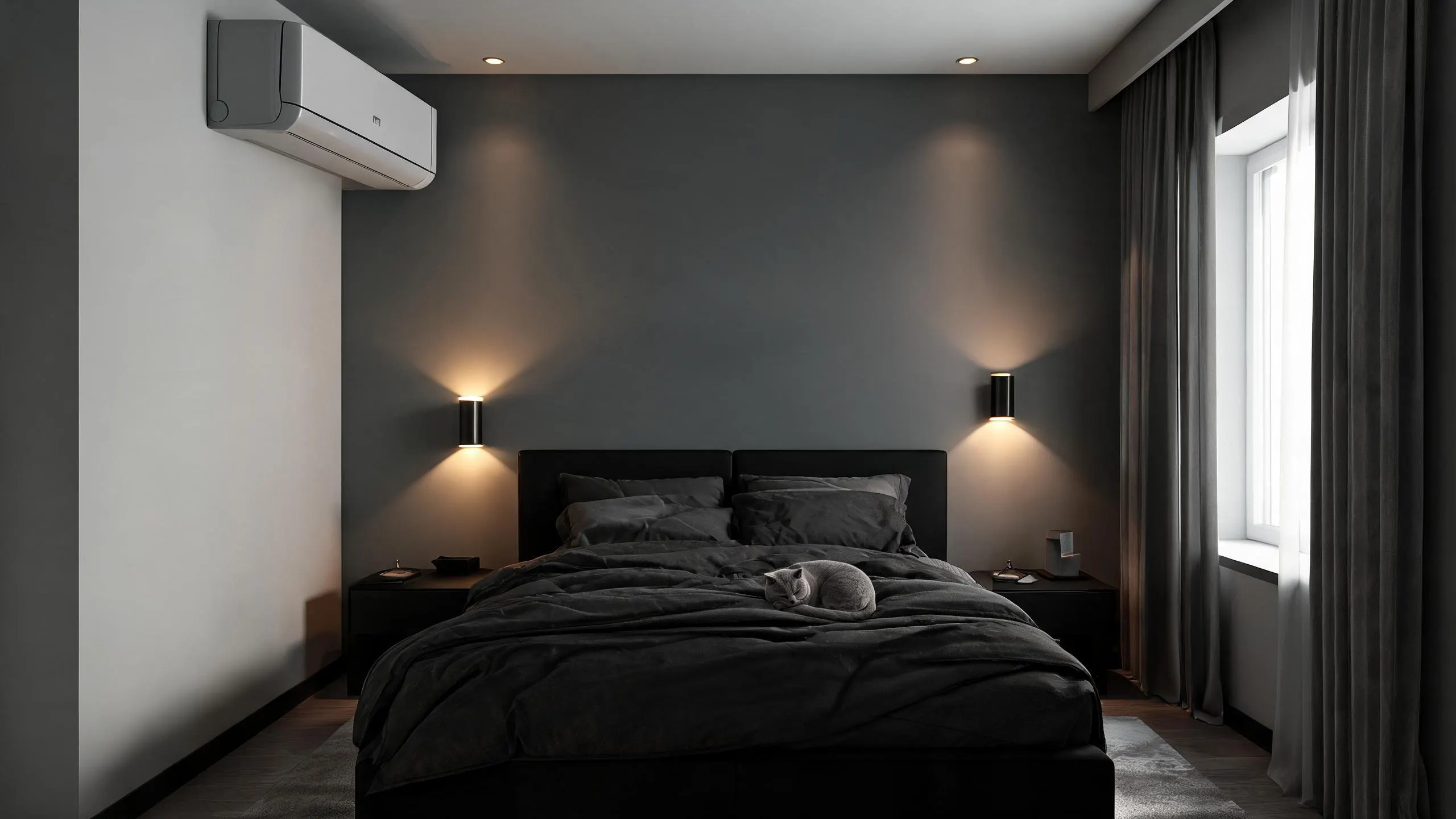
Mini Split Installation in Covington, GA
A new system here will heat from November through March and cool from May through September every year. Tell us about the house, and a licensed contractor who covers Newton County will get in touch.
Tell us about the job
It takes about a minute.

Ten months of work a year in Covington
A mini-split in Covington runs most of the year. Winters average 35°F, mild enough that a heat pump can carry the heat load without much help. Summers average 89°F, and the same unit switches over to pull that heat back out. Between the two seasons, the system is working 10 months a year.
Most homes here already heat with electricity, so a new mini-split is doing a job the house is used to paying for, just more efficiently. Any unit installed now has to meet the federal minimum for split-system heat pumps, 14.3 SEER2 for cooling and 7.5 HSPF2 for heating. Georgia also sees its share of power interruptions, so it's worth asking your installer how the system handles a restart once power comes back.
- 5 months
- November through March, your system heats
- 5 months
- May through September, it cools
- 35°F
- the average winter night it heats against
- 89°F
- the average summer afternoon it cools against
NOAA nClimDiv, 1991–2020 normals
Georgia requires HVAC contractors to hold a state license.
The State Construction Industry Licensing Board is the one that tests and records HVAC contractors here, and the license sits with the contractor, not with any single job. So the same license that would cover a furnace swap or a heat pump install covers a mini-split install too. That is where the accountability for the work comes from in Georgia.
Beyond the license, this job still needs a permit and inspection from the local building office in most cities and counties, since a mini-split installation falls under the same rule as putting in a furnace or an air conditioner. The permit puts the job on record, and the inspection is what checks the line set and wiring were done right once the work is finished.
Source: Georgia Secretary of State
- Is a mini split worth it?
- For most homes, yes, especially if you're heating or cooling a room that isn't on your main ductwork, or you don't have ducts at all. Covington needs heat from November through March and cooling from May through September, so a system here runs most of the year, and a mini split with a good HSPF2 and SEER2 rating handles both from one unit. It also gives you a way to keep at least one room comfortable if the power goes out and comes back, since a large share of Georgia households lost power for a full day or more in 2024. Whether it's worth it for your house depends on what you're trying to heat or cool, which a contractor can walk through with you.
- How many rooms can a mini split cover?
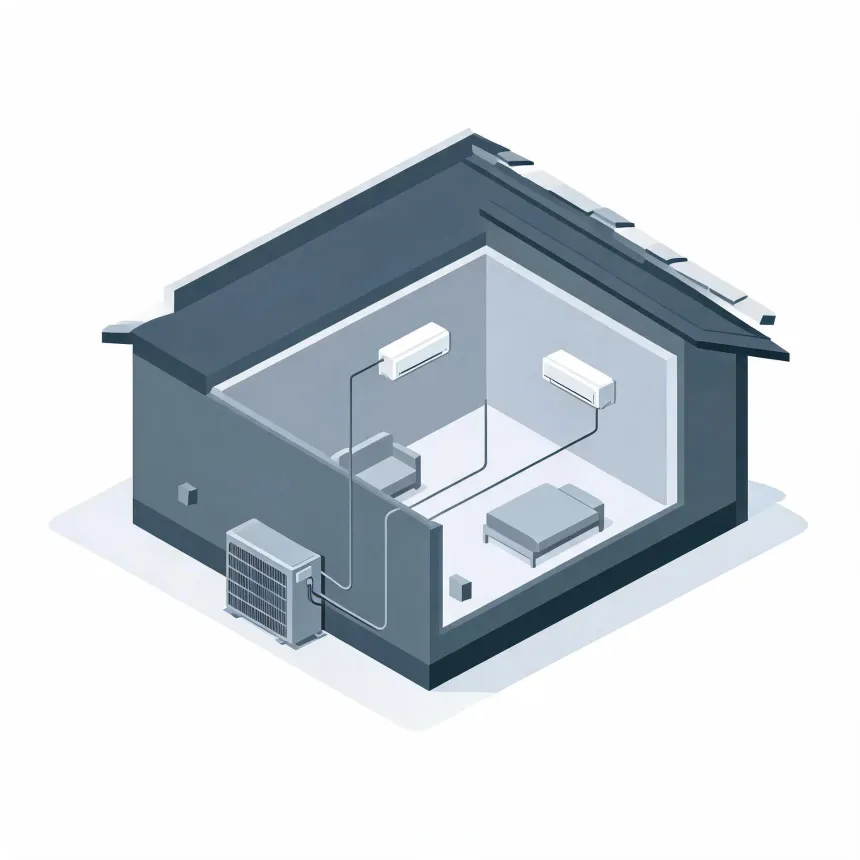
- A single outdoor unit can run one indoor head or several, depending on which system is installed. A single-zone system covers one room or open area. A multi-zone system runs several indoor heads off one outdoor unit, each with its own thermostat, so bedrooms and living areas can be set differently at the same time. The number of zones a house can support depends on the size of the outdoor unit and the load in each room, so a contractor needs to look at the space before recommending how many heads make sense.
- Can a mini split heat a whole house?
- It can, if the system is sized and laid out for that. A multi-zone mini split with an indoor head in each main room can heat a whole house the way a central furnace does, just without ductwork. In Covington, where winter lows average 35°F, the heat pump has to be rated to keep up with that, so the HSPF2 rating and the size of each zone both matter. A contractor can size the system room by room based on your house's layout and insulation.