
HVAC Installation in Gainesville, GA
A new system here will heat from October through April and cool from May through September every year. Tell us about the house, and a licensed contractor who covers Hall County will get in touch.
Tell us about the job
It takes about a minute.

A system that runs almost year round
In Hall County, a heating and cooling system doesn't get much rest. Homes here need heat from October through April, then cooling from May through September. That's all twelve months, no season off.
Winter nights average 34°F, so the furnace or heat pump is working most nights, not just the coldest ones. Summer afternoons average 87°F, and the air conditioner has to bring that down day after day for five straight months. Two-thirds of homes here heat with electricity, which means the equipment sizing and the ductwork have to be right, not just close. And with storms knocking out power for a day or more in close to a third of Georgia households last year, a new system installed correctly, with the right shutoffs and controls, matters more here than in places that see fewer outages.
- 7 months
- October through April, your system heats
- 5 months
- May through September, it cools
- 34°F
- the average winter night it heats against
- 87°F
- the average summer afternoon it cools against
NOAA nClimDiv, 1991–2020 normals
Georgia requires HVAC contractors to hold a state license.
The State Construction Industry Licensing Board tests and records the contractor, not the job. That license stays with the person or business doing the work, in Hall County or anywhere else in Georgia, and it does not need to be renewed for each new customer.
For an installation, the license tells you the contractor is who the state says they are. The permit and inspection are what check the job itself. In most cities and counties, putting in a new furnace, air conditioner or heat pump needs a permit from the local building office and an inspection once the work is done, and that inspection is what confirms the gas and electrical connections were made correctly.
Source: Georgia Secretary of State
- When should I replace my HVAC system?
- Replace it when repairs start piling up or the system can't keep the house comfortable anymore, whichever comes first. An older furnace or air conditioner is a candidate even if it still runs, because the parts inside are wearing out together. If you're calling for the same problem more than once a year, or a contractor tells you the fix costs close to what a new system would, that's your answer. Homes here need heat or cooling every month of the year, so a system on its last legs doesn't get much of a break to fail quietly.
- Should I replace my furnace and air conditioner at the same time?
- If they're close in age, yes. A furnace and air conditioner installed together are matched to work as one system, and pairing a new one with an old one can mean the new unit never runs at its rated efficiency. It also means you're not paying for a second installation before long when the older piece fails on its own. A contractor can look at both and tell you whether replacing just one makes sense for your house or whether they should go together.
- What happens during an HVAC installation?
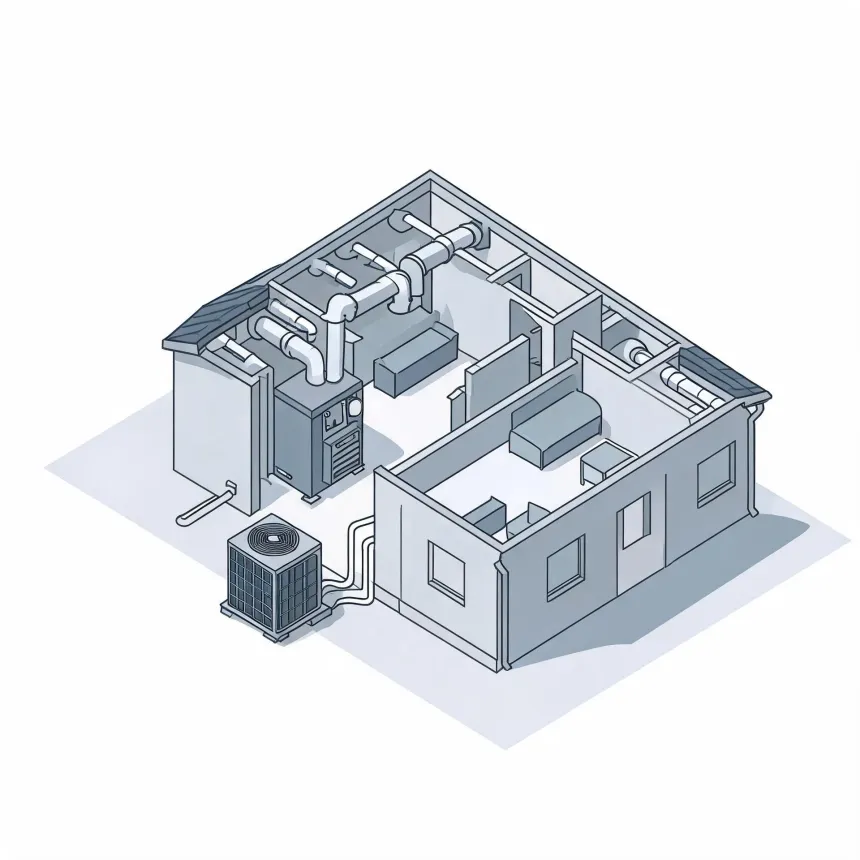
- A contractor removes the old equipment, sets the new furnace or air conditioner in place, and connects it to your ducts, gas line or electrical circuit, and condensate drain. They'll check that the ductwork matches the new equipment's airflow needs, since a system sized wrong for the ducts won't heat or cool evenly. Once it's running, they test it, check refrigerant charge or gas pressure, and walk you through the thermostat. Georgia requires the contractor doing this work to hold a state license through the Construction Industry Licensing Board.