
HVAC Installation in Columbus, GA
A new system here will heat from November through March and cool from May through September every year. Tell us about the house, and a licensed contractor who covers Muscogee County will get in touch.
Tell us about the job
It takes about a minute.
Ten months of the year, your system is working
Muscogee County only gives your equipment two months of rest. Heat runs November through March, with winter nights averaging 37°F. Cooling picks up in May and holds through September, with afternoons averaging 90°F. That is 10 months where a furnace or an AC has to perform.
A new system here has to handle both ends of that without strain. 56.5% of homes in the area heat with electricity, so a heat pump or electric furnace has to be sized right for those winter lows, not just the summer heat. And with 31% of Georgia households losing power for a day or more in 2024, a working system is only as good as what happens when the power goes out.
- 5 months
- November through March, your system heats
- 5 months
- May through September, it cools
- 37°F
- the average winter night it heats against
- 90°F
- the average summer afternoon it cools against
NOAA nClimDiv, 1991–2020 normals
Georgia requires HVAC contractors to hold a state license.
The license is issued to the contractor by the State Construction Industry Licensing Board, and it covers the contractor rather than each job. It stays with them from job to job.
For an installation, that license is what backs the person doing the work. In most cities and counties, putting in a heating and cooling system also needs a permit from the local building office, with an inspection once the work is done. That inspection is separate from the license, and it is what catches a bad connection or a wiring mistake before the system runs for years with one in it.
Source: Georgia Secretary of State
- When should I replace my HVAC system?
- Once a furnace or air conditioner is old enough that it's breaking down often, or a repair is going to cost a large share of what a new one would, replacement makes more sense than another fix. Age matters too. A furnace or air conditioner working hard through five months of heat and five months of cold every year here wears faster than one running just a few weeks a season. If a contractor tells you the heat exchanger or the compressor has failed, that's usually the point where repair stops making sense.
- Should I replace my furnace and air conditioner at the same time?
- If both are near the end of their life, replacing them together is often worth asking a contractor about. They share the same blower and the same ductwork, so a mismatched pair, one new and one old, can run less efficiently than a matched set. It also means one installation and one inspection instead of two. But if one system is several years newer than the other, replacing just the one that failed is still the right call. A contractor can look at the age and condition of both and tell you which makes sense.
- What happens during an HVAC installation?
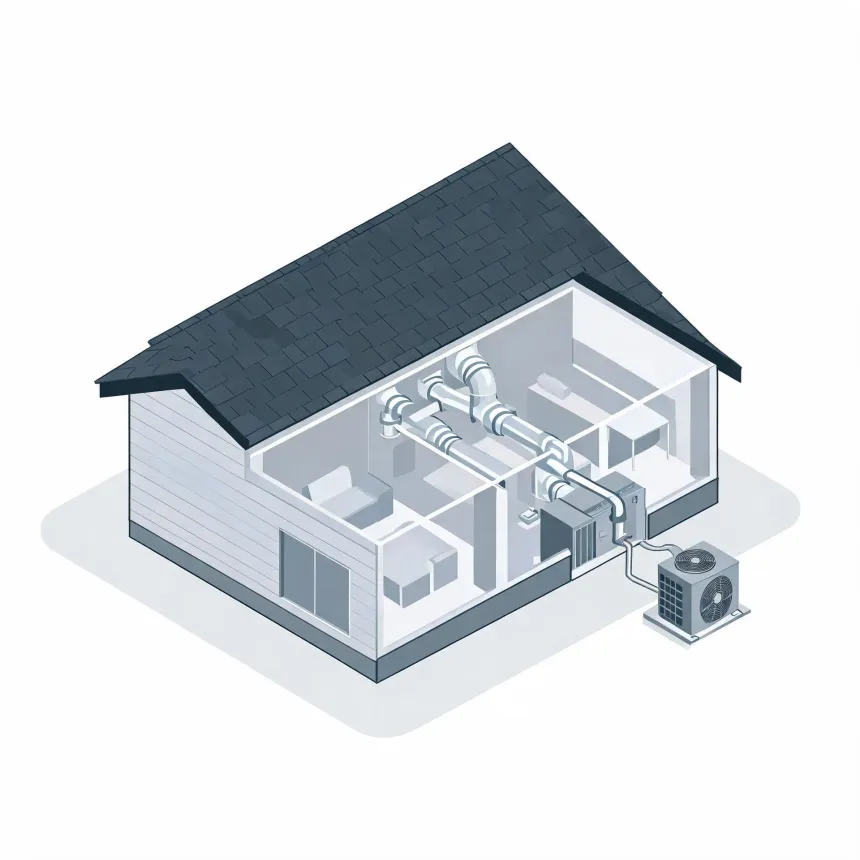
- A contractor removes the old furnace, air conditioner or heat pump and sets the new equipment in place, then connects it to the ductwork, the electrical supply, and for a furnace, the gas line and venting. Refrigerant lines get connected and the system is charged to the correct level for the equipment installed. Once it's running, the contractor checks airflow, tests the thermostat, and confirms the system cycles on and off the way it should. In most places around Columbus this work needs a permit from the local building office, and an inspector checks it once it's done.